

Literature Review on Women Empowerment
Empowerment of women is multi-dimensional, multifaceted and rising notion of development in feminist literature. The concept of women’s empowerment relates to social, economic, political, personal, religious and psychological elements. From the literature survey, empowerment emerges as context specific and has compound determinants. Women are competent of empowering themselves while external actors and factors may generate helpful and supportive environment.

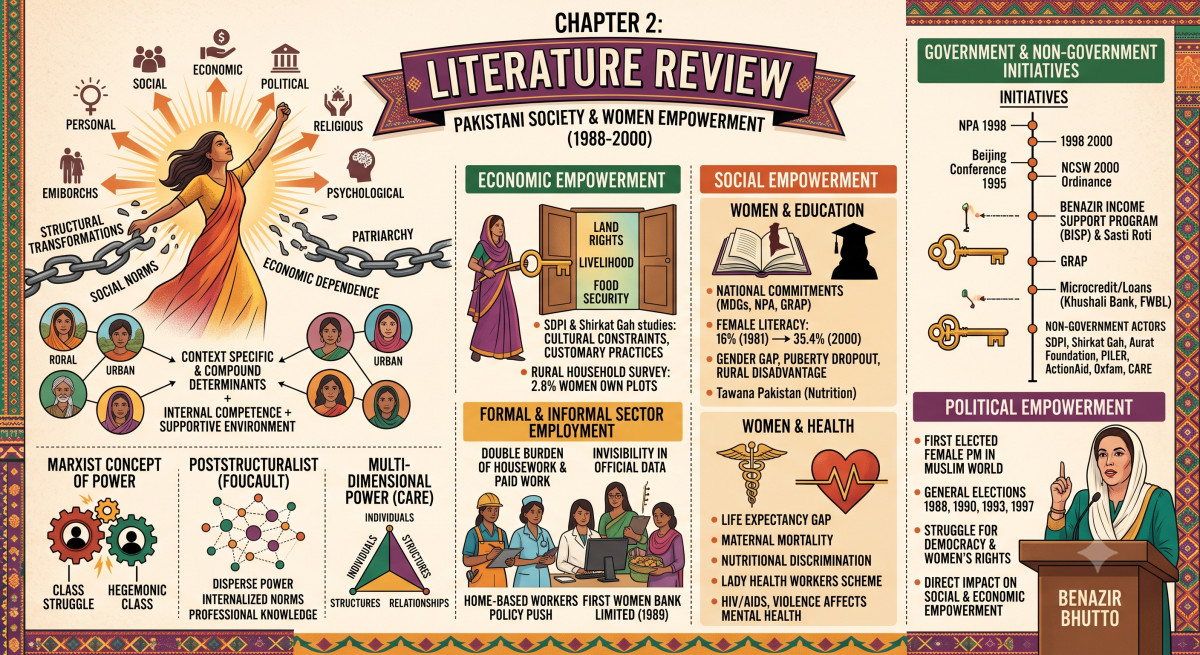
LITERATURE REVIEW
The present study was designed to investigate into the problem of “Pakistani Society and Challenges of Women Empowerment 1988-2000”. A review of literature related to the theme of the study was undertaken to develop framework for the investigation. In this chapter this review is presented.
Empowerment of women is multi-dimensional, multifaceted and rising notion of development in feminist literature. The concept of women’s empowerment relates to social, economic, political, personal, religious and psychological elements. From the literature survey, empowerment emerges as context specific and has compound determinants. Women are competent of empowering themselves while external actors and factors may generate helpful and supportive environment.
Empowerment of women is normally defined in a broad diversity. Some of which comprise access to the resources especially material, for example money, land, income, credit availability, respectable job opportunities that involve conducive work environment, power, access through representation in the public decision-making bodies and freedom of choices and enjoyment of basic rights that are provided in the constitution and in the international agreements. Access to health facilities, quality education, mobility to attain various facilities and control over their bodies especially in the reproductive choice and in sex are also included in it. Empowerment is a path to women’s own parity and rights but the influential view of the women’s empowerment means, a better family, economy, society and nation.
2.1. Definition of Empowerment
Empowerment of women is a compound and growing notion which is continually being defined, redefined, explained sharpened and clarified. Empowerment is also linked with the gender equity and equality that emerges to be the decisive goal of women empowerment. It has been inter-linked with the structural transformation of the society through labour and land reforms, opportunities of education, access to the resources, autonomous feelings, power of decision making, control over fertility and women’s own control on their bodies, reproduction and sexuality. Empowerment is a situation-dependent and vague conceptual view which cannot be imposed in all contexts without space and time considerations. In practice it is impressionable notion which may show diverse things in varying and manifold contexts, therefore it eludes a clear and brief definition. The empowerment should also be conceptualized by women’s own perspectives and way of living and not by the imposition of urban middle class concept of rural women having dissimilar cultural space.
2.1.1. Poststructuralist Concept of Power and the Marx
The notion of power has undergone radical transformation over time. Marxist concept of power relies on the idea that leading social classes of the society use power over the lesser and suppressed classes until they are overthrown through social clash and a new hegemonic class appear. Customary perception of power as exercised by someone was critically challenged by the poststructuralist movement in 1980s. This time French historian, Michel Foucault initiated the idea of power as disperse and discrete phenomena existing in singular vertical dimension (Foucault, 1972, 1980). Foucault said that the power existed at many points through the appliance of professional knowledge derived from the medical, social and political disciplines (1979, 1988). Under this concept, power is not an entity which can be possessed through an individual or class, but a procedure that can happen in any circumstances that can create sense of power. Significant purpose of the disseminated power is to generate passive and disciplined bodies to establish social norms and conventions that can be ensured through scientific and punitive actions.
Debate amongst the poststructuralists and Marxists as well as the postmodernists started on the issue. The Marxists emphasized that many classes do exercise power by the state in addition to their own interest about capital growth. According to them domination of corporations globally resides with those who maintain control over knowledge-making industry such as the corporate media and publishing houses that produce educational curricula. Consequently, the power to create novel discourse resides with means and methods to produce, distribute, and flow the knowledge.
2.1.2 Concept of Multi-Dimensional Power
International NGO, CARE provided a new definition of empowerment which cover the three dimensions that are relationships, structures and individuals. According to CARE, the individuals should achieve power to change and effect change; structures which dictate economic, social and political power holding must be altered; and the human relationship must be created or altered to support the change. (CARE).
While describing this three dimensional model of transformation and power the organization CARE emphasized that excluding the lives of poor women on the basis of race, caste or other marks of social differentiation is dis-empowering and a change in three spheres, structures, individual and relationship is necessary elements for the women’s empowerment.
The World Economic Forum provides another holistic definition of the empowerment of women that comprises the notion of fundamental human rights in its formulation of empowerment of women.
Last thirty years have witnessed a gradual growing consciousness of the requirement of women’s empowerment through the acts to augment the social, political and economic equity and broader way into the basic human rights, improvement in food, basic health and education (Lopez and Zahidi, 2005).
Naila Kabeer describes the multidimensional character of the empowerment and its diverse manifestation in her study about the third millennium development goal (MDG) in relation to the gender equality (Kabeer, 2010). She created a picture of empowerment of women as encompassing superior access to economic and social resources, knowledge with greater authority in economic and political decision making process. Kabeer told that the authority is in the process of decision making to the idea of access to political, social and economic resources, together with the health, food, education, employment, ownership of property, credit and reach of medical. Kabeer also want change in the division of sexual labour which is the important area of feminist discourse.
In this study the importance about realizing enterprise development, chain of supply and marketing practices was also discussed that enhance the empowerment of women and promote equality through community advocacy and initiatives (UNIFEM 2010).
It is clear from the above discussion that the idea of the empowerment of women is expanding and broadening and in the procedure, encompassing on the increasing areas of women equality on political, legal, social and economic levels. But this method of broadening and deepening also add to impression as it comes to mean different things to different people.
Any policy involvement cannot be a split one, unless the interference and holistically planned and empowerment may not happen in all departments of lives of women. Empowerment in one area and it does not essentially escort to the empowerment in others area. In the context of Pakistani society, there is a huge gap between ground realties and aspirations provided by the constitution, especially in the rural areas where conventional communities do exercise total control over the choice of women. So, a methodical change is necessary which should be not just in individuals but in institutions that specifically sustain patriarchal structures and system. To achieve the empowerment on household level, large policy interventions is necessary (Chaudhary and Nosheen 2009).
There is an important caution which is essential to put here. Some of the ideas of the feminist of development practitioners have not been borne out by the study. Although, it is helpful to plan, design and apply the interventions, the empowerment may not happen or take a shape as it visualized. The procedure is exaggerated by a lot of factors and overwhelmed by options and events that rapidly altered the political alignments and a straight forward relation among policy interventions and output cannot be guaranteed. This is important to refer here the Bushra Zulfiqar’s perceptive and analysis that acknowledges empowerment is a complicated process and is deeply embedded in cultural and social constructs which elaborate its scope and limitations (Zulfiqar 2010).
The empowerment of women is repeatedly equated with the capacity to make choice in the lives and it is assessed that the economically independent women are able in making choices for themselves. Bushra Zulfiqar argued that the exercise of the choices is very limited about many factors, especially the gender view of feminine and masculine. She said that my important argument is that economic participation alone does not lead to the empowerment of women. Access to the labour market only does not improve the status of women within the household hierarchy and it does not influence the power relations in their favour (Zulfiqar 2010).
The matter is also reflected in Manisha Desai’s evaluation of the idea of empowerment and formal labour and urban elite prejudice of the UN Development Program (UNDP), Gender Empowerment Measure (Desai, 2010). Desai says that a reduction in the measured gender gap does not convert into the gender equality. According to her positive trends in the gender empowerment are commonly accompanied by intended negative consequences of development. The situation is reflected in Pakistan, where some times the violence is unleashed on women who try to become empowered economically or legally. When women demand their share in the property or try to make marriages with their own choice, they have to face the violence.
A perception of the compound, conflicting and multi-dimensional empowerment nature is essential before planning interventions. It should also be kept in mind that empowerment is not a fixed point at which a woman may reach at last one day. It is a continuous process which remains almost throughout life span. It is also not essential that this process must move forward, empowerment may reverse if the political, social and economic environment changes with the change of scenario. This is reflected in Pakistan in the decision of Federal Sharia Court in 2010. When it declared that some articles of the women’s protection Act 2006 were adverse to the Sharia and constitution and the Hadood Ordinance was restored with the Zina Ordinance. This act was a cause of reversing of the some protections obtained by women after a struggle of a decade. Sometimes the empowerment of women becomes a fluid process where it seems unidirectional. It is not taken for granted and it has to be strived for constantly over the whole life time.
2.1.3 Contextual Nature of Power
It is broadly recognized that the notion of empowerment of women is complicated and open to manifold interpretations that are situation dependent. In a study of five Asian countries, Mason and Smith reached a conclusion that gender relations are drastically influenced by the norms of the society and traditions (Mason and Herbert 2003). It was roughly acknowledged that the idea of the empowerment of women is multifaceted and open to diverse interpretations depending upon the prevailing conditions. They reached the conclusion that in this study the interpretation of the women empowerment was better in the society in spite of individuals. It was also established that empowerment is naturally multi-dimensional and compound as the women may be empowered in some departments and not in others (2003). This time Mason concluded that the norms of the society and traditions are serious determinants of the empowerment of women in the given situation and must be changed if a meaningful alteration is essential.
Power was considered the major force which excludes and marginalizes the individual and groups in this project. Getting from the Foucauldian idea of power as discrete and disperse, it is observed as permeating individuals, groups and societies, in spite of emanating from a fixed point (Hebert 2010). Farida Shaheed, in her study about the gender, religion and religious identity to a system elaborates all aspects of life (Shaheed, 2009). Nathalene Reynods also supported this argument who argued that the issue specific to Pakistan context in which the government during brief democratic interval has struggled to keep the social structure integrated must be analyzed to understand the issue of the gender equality in the country (Reynolds n.d.).
2.1.4. External Sources of Power versus Self-Empowerment
The proposal that women should take the initiative for their own empowerment as the alternate in spite of relying on exterior forces was there. Bushra Zulfiqar argued that the empowerment is relative and compound fact with dissimilar articulation for different individuals (2010). Bushra said that it is not possible to address the matter of empowerment at individual level because the empowerment is a state of mind that is not be granted by any other or outer factor. The said external source may be the civil society, the donors and the government which can help and create good environment for women in their own choices. The role of these forces is to provide women with a social space which is free from violence, discrimination and fear. The capability of women to exercise the choices is constrained by gendered conceptions of femininity and masculinity which is given in the situation. Zulfiqar argued that the empowerment of women can finally challenge and alter patriarchal attitude and affect such stereo types and thereby reinforce inequality. Zulfiqar argued that the empowerment of women can finally challenge and alter patriarchal attitude and affect such stereo types and thereby reinforce inequality. Bushra Zulfiqar pointed out an important element in her analysis of the politics of empowerment. She described an important area which has been rendered imperceptible because of the biases and silence surrounding the issue. This is the important sphere of the choices of re-productivity which is often controlled by families and women have very less choice on their own bodies and sexuality. In particular contexts women are not permitted to manage contraceptive usage, childbirth and fertility. This is actually one of the biggest sources of dis-empowerment. The said argument is also supported by Lori Adelman who asserted that at the middle of the equality and empowerment there lays a basic right of a person and capability to control her own body including her sexuality. Adelman argued that without enjoying these rights, women are unable to go to the school as they are forced into early marriages or sexually harassment, raped or expelled on the basis of pregnancy. Due to the religious beliefs and cultural biases generally women sexual and reproductive rights are covered in silence (Adelman 2010).
2.1.5. The Instrumental View of Women’s Empowerment
While forcing the opinion on the bases of access of rights and equality, the literature on the empowerment of women also reveals the influential arguments on the bases of logics that the empowerment of women is not an end in itself but it is the mean to achieve other ends. The World Bank also took the same point of view in its statement that the empowerment has long been legitimized in the development discourse, not just for the betterment of the women but also for the positive impact on families (Mason and King 2001). The analysis is similar to the argument commonly advanced for the education of the women that if one woman educated that means the whole family and the society will get the benefits of it. The trend to view the empowerment of women as the means to some outer goal is visible in the argument that the empowerment of women leads to the economic growth. This tendency to view the rights of women as a tool of achieving other objectives is also audible according to the UN Population Fund that the empowerment of women is essential to the sustainable development and realization of basic human rights for all. Influential interpretation for the empowerment of women includes, but is not limited, notion based on communal benefit, positive impact on families, economic boost and development that is sustainable.
The arguments that are based on instrumental impact deviate from those based on right and equality that stress the empowerment as the basis of equality of women and their satisfaction of basic rights. An active justification for any right may be ease of access to such rights in contexts where the opposition is observed. These arguments become self-defeating for they affect the idea that the empowerment is not imperative for women’s own sakes but because it serves some reasons that are wider and exterior to their interests.
2.1.6. Measurement of Empowerment
A challenging characteristic of empowerment of women is the problem of how to measure and compute this abstract but substantial concept. The measurement index provides a quick picture of facts, tends from the limited, vast and complicated data to few measurable variables. They lean to leave telling information, subjective experiences and ontological issues that create a clear picture. However, measurement of the empowerment is helpful to policy makers and enables them to modify interventions based on the broader emerging picture.
For the measurement of empowerment the gender gap index (GGI) is used and it gives the picture of inequality between women and men. In the gender gap index the situation of gender gap may become clear in the particular situation. The four features of the gender gap index show economic contribution and opportunity, achievement in education sector, political empowerment, health and survival. Gender empowerment measure was outdated and was replaced by the Gender Inequality Index which is an amalgamated measured form reflecting the inequality in the attainments between men and women in three ways. These were the reproductive health, empowerment and the labour market, which was proposed to relationship on the level of empowerment and the labour market and was projected to capture the drawbacks faced by the women and girls in three spheres. However, while index may be helpful for the technocratic interventions, they fail to reveal the unseen and the invisible dimensions of empowerment and daily life experiences of the women.
Malhotra, Schuler and Boender (2003) described six dimensions of empowerment to measure the empowerment of women as variable in international development. These six dimension of empowerment were economic, socio-cultural, familial interpersonal, political, legal and psychological. These dimensions proposed the six proportions of empowerment that are socio-cultural, economic, familial interpersonal, legal, psychological and political. These dimensions proposed the intricacy of perception of empowerment and the difficulty in capturing its true spirit in varying manifold situation. All dimensions are deeply interlinked with each other that even in identifying the relationship among them is a difficult task to do. These difficulties of measurement of such a fluid, fragmented and malleable concept was pointed out in a study of the determinants of empowerment in southern Punjab (Chaudhary and Nosheen 2009). In the said study both authors discussed and argued the questions that how the empowerment is to be measured and remained unanswered and no accurate method has been developed. These authors said that there is a proliferation of outcomes and it is not clear from the measurement and is very difficult to indicate accurately what the determinants of the empowerment are in a specified situation. They said that in Pakistan the empowerment of women has regional and religious attributes and it interrelates with the old traditions and norms of subordination of women and in turn leads to malnutrition and lack of women education.
Chaudhary and Nosheen analyzed that since the idea of the empowerment varies from area to area and region to region and culture to culture, the determinants and its measuring methods also vary with it. More confusion arose from the fact that while household and family relations are also the reason of lack of empowerment of women and they do not dis-empower the other groups. Both authors suggested that a multidimensional analysis is required; so that the result may show numbers of factors and statistically important relationship on the level of empowerment. By the context of the said study, the important factors are joint family system, paid work of women, bank account of women, access of women to the media, women participation in joyful activities, age of women, marital status, religion, caste and their view point Islam. Huge number of determinants of empowerment in varying context was intimidating. They told that any measure is essentially limited and cannot capture full amount of the empowerment of women at all levels and in all social, economic, cultural and political contexts.
2.1.7 Social and Economic Empowerment
Although, it is difficult to explain a single over arching meaning of empowerment from the worldwide literature but we can elaborate important elements of empowerment of women that may be derived from literature. These elements will be helpful to understand the concept and will clarify the term:
· Economic Empowerment
· Social Empowerment
· Political Empowerment
The economic empowerment is based on the land rights of women, their livelihood and their labour activities in formal and informal sectors. In social empowerment health and equal access of education may be discussed and in political empowerment the representation of women in elected bodies are included.
2.2 Economic Empowerment
2.2.1 Land Rights, Food Security and Livelihood of Women
2.2.1.1 Land Rights and Women
There is an enhancing understanding of intersection among land rights of women, their livelihood and food security. It is a general concept that in Pakistan this issue has been neglected and did not feature in the land reforms of 1977, 1972 and 1959. After these reforms several studies about these reforms occurred in the later years. Sustainable Development Policy Institute (SDPI) also made a land mark study on this subject. This study based on the assumption that if the women have had the proper share of land rights, it would not only provide momentum to their own economic empowerment but it would empower both women and men collectively (Khattak, Brohi and Anwar 2010). In this study observation was made, land as an economic source and a resource of power and authority would add considerable empowerment to women. The study of SDPI concluded that land is viewed differently across geographical regions and in different social context. According to men the land was a source of authority and status and a symbol of power on which basis they could access to credit and other commercial activities. In the study Khattak elaborated that more than 89 percent of men surveyed across the field sites supported women’s Sharia based right of land. Some of the men thought that the ownership of land was a basic right of women. Twenty percent of the men argued that there should be no control of women on land due to customary practices, traditions and a perception of lack of management skill of them.
They argued that women were incompetent to manage the matter of land. However the majority of them believed that women could own and they had the capacity to manage the land either alone or with the help of male. Khattak et al argued that acknowledgement of the rights of women was not converted practically and the share of women in family inheritance was not ensured. It is a fact that where the land is highly productive, the men did not support the right of women to own land and where it is a premium commodity the men are little bit supportive. Normally men who support the land rights of women principally do not intend to give this right by themselves to their female relatives in the share of land.
In the study of SDPI, all the addressed women showed their interest in the land. They think that there is respect, honor, authority and economic power in it. Although, they had a big concern that this will not happen in practice because of the mind set and norms where men are perceived protectors and providers and in return thereof women surrendered their rights of ownership. Due to lack of social shield in the system women are dependent on their male kin and local norms and personalized system of protection, arbitration and dispute settlement mechanism. Women tended to think family interest and ignore personal interest and it is said to them that they are integral part of the family and not a separate legal entity. Generally, the women freely give up their right of land and its control to their brothers, husbands and sons. Sometime indirect forms of violence are used to force them to surrender their rights to male relatives. Women are found normally ignorant about the laws and the constitutional provisions that guard their rights. Women tend to view the state as an isolated and intangible entity that had not penetrated their lives and most of the women are turned to personalized local system to protect their interests.
In a study of Shirkat Gah about access of women to the land and their right it was analyzed that rights of women were linked to access and control over assets (Mumtaz and Noshirwani 2007). In that study it was established that opinion of the low status of women and their subordinate position in the community prevents them from obtaining their rights. Traditions and customary practices that are strengthened by social structure restrict the women mobility and making active control over their resources difficult. In spite of being owner of the land they lack control of authority and dependence on male kin. The study also exposed a widespread lack of knowledge of women land right and deficiency of social legitimacy for the use of such rights and authority. Bribery and long complex process of accessing and ensuring the execution of law further complicates the picture of women right. The discriminatory rules and laws against women reinforce the idea of their secondary and subordinate position in the society. Mumtaz and Noshirwani assessed that whenever women make any claim about their rights, an inadequate support structures and mechanism results in threats of violence. They find out the lack of concern of legislators, politicians and policy makers towards the issue of land rights of women and scarcity of their supporters.
SDPI reported that in the country gender profile the female ownership of land is limited but the data about the ownership of land or access to credit is not available (2008). Rural Household Survey of Pakistan described that women owned 2.8% of the plots and 67 % of villages surveyed declared that women maintained the right to inherit land. According to the SDPI gender profile, barriers to ownership of land for women include family pressure, threat of social boycott, dependence on male relatives to deal with outsiders, complicated legal process, threat of violence, traditional rules and biased discriminatory parallel judicial system like Jirga and Panchayat that is now considered as alternate dispute resolution system.
Article 25 of the Constitution of Pakistan confirms the gender equality and the legal systems that affirm the inherited rights of women in the country (Constitution of Pakistan 1973). But lack of political will and discriminatory cultural norms are depriving women from their rights. There are many areas where brides are also considered a property and commercial commodities according to the traditions. In areas where the custom of bride price prevails, women themselves are seen as property. In addition, at the time of death of husband the wife is deprived of her share and it is a common traditional practice in many areas. There is no ethical obligation of women rights of land in these areas and the law is too weak in its implementation to give the rights to women. In the formal courts lengthy process is involved for women to get their legal right of land share. Actually, the land rights of women are deeply linked with the social norms and political and economic status.
One finding of the SDPI study was that women do not succeeded in their claims for their right of land due to the apprehensions of social criticism and they think that they are fundamental part of their family instead of as autonomous and independent legal entity. This was borne out in a study of the tenant farmers of land in 10 districts of Punjab (Saigol 2010). This was a study of the struggle of Anjuman-e-Muzaraeen’s (Tenants Union) and focused about the role of women leaders and declared that if women are in front of a movement for land rights they may play active role in fighting with even a militarized state. In this story the women did not fight only for their rights they also initiated struggle for the rights of their husbands, sons, fathers, brothers and for the rights of land of all male members of their families. Actually, it was said by the loud women leader of the struggle that we must fight for the joint ownership of the land at least once the government agreed to give land to the tenant farmers. When the state agreed to grant land in their own names of the participants of the women, women appeared with the passion that they considered themselves as part of their community and family and they do not consider themselves as a separate entity. In this study the male tenants were also interviewed and were asked about the right of women ownership of land, they supported the idea but there was no practical assurance for their womenfolk and their right of land (Saigol 2010).
2.2.1.2 Right of Food
It is clear from the previous discussion that the land rights of women and right of food are closely associated with each other. According to the Human Rights Council Advisory Committee of the United Nations on the right of food, the women cultivate half of all food grown globally. But it is also a fact that the 70 % of the affected persons of nourishment, food hunger and poverty are women. According to the human rights council, access of women to control and ownership of property and land are critical to understand the manifold factors, strengthening their livelihood and security (UN Human Rights Council 2010). The legal system, marital status, inheritance and agrarian reforms policy that obstruct the equal access of women to land and the way that affect women by virtue of the nation. It is estimated in the UN study that women have access or control over only five percent of the land globally, in spite of constituting their gender at the level of individual or community in the majority of agricultural workforce production.
The proportion of female headed household in Pakistan, regionally, is among the highest level of 25 % of the total rural households (Food and Agriculture Organization 1995). An important study about the female headed household and urban poverty in Pakistan established that 31 percent of the respondents were the only breadwinner in their families and 8 percent of the households had only female earners while 14 percent had females as the major earners (Mohiuddin 1989). The said women are included on the single parents, widows and the wives of migrant workers.
The rural households persist to obtain lands through inheritance practices based on the customary system that endorse unequal rights of women to use and control over land. Because the land attainment is mediated by male kin, the land rights of women are discussed within a framework of unequal relations of gender and female prerogative is not an authorized social value. In the context of culture and social norms the household allocation of property is uneven in the rural areas. It is alarming that the Food and Agriculture Organization warned that in the developing countries many women suffer from malnutrition as men and girls are also likely to die due to the same reason.
According to the Human Rights Council, women get better food security of their households with their good access to income generation activities and ensuring food availability. The right of access, control and administer to land is directly related to the right of women to exercise financial independence, earning of livelihood and then provide livelihood for herself and her households. Agricultural reforms with gender blindness continue to exclude women from their entitlement to land. The women that are responsible for the preparation and procurement of food are most directly affected with the food shortages in a country, like Pakistan where agriculture is the backbone of the economy and women are interlinked with it. In 2009, a revealing incident highlighting the central role of women in providing food security happened in Karachi, when almost fifteen women and girls died during an effort of grabbing one bag of wheat flour which was distributed by a donor as help. This event was alarming as it brought to light extreme anxiety of the poor, especially the women for one of the most basic right that is the right to live.
2.2.1.3 Women and Agriculture
Women are generally considered an important part of the agricultural life and its work force. The SDPI’s Country Gender Profile of 2008 reflects that women in rural areas are engaged in agricultural activities as unpaid family helpers and they are not registered as agricultural workers. The women in agriculture sector do not know how to increase their income generation capacities and technical financial way out to enable them as better earners. According to the study, 38.4 percent of men in the labour force are engaged in the agriculture and associated fields and the women in the same field are 69.9 percent. Some agricultural reforms were held towards the distribution of ten to twenty acres of land to women to grow food but this is too large for women to hold and manage the cultivation by their own (Sadeque and Hisham 2009).
In spite of family labour women can administer the agricultural land between two to four acres. If the distribution of land is uneven in excessive mean it is also not feasible for women to hold it solely and it is also subject to the proper storage facilities and mechanical and institutional support for them. Microfinance is also important in agricultural sector but most of the women are deprived from it or they do not have the proper access to this type of loan to cultivate their land because most of the agricultural extension services and programs are generally organized for men only.
Departments that are working for the extension of agriculture are not conscious about definite needs of women and they are generally based on recommendations for commercial and large scale industrial farming. There is no gender specification in agricultural task and all programs are in general in spite of some programs of picking and seed preparation. In the field of livestock the situation is similar, as women have no extension support and cannot market their products due to reduced access to the market. If some posts for female extension workers were created they are lying vacant because there is a shortage of qualified female staff, it has also been pointed out that this may be due to lack of security, lodging and transport facilities (Sadeque and Hisham 2009).
There are many contradictions that overwhelmed agricultural policies and practices. The agricultural policies pay lip services to the addition of women in the mainstream and they promote cash crops for export and they do not focus on small land owners and normally women are in the category of small holding and they gain nothing in these policies. Due to attention only on large holdings many of the women cannot be recognized or registered as farmers. The role of women in cash crops is only as pickers and not as grower. Due to these conditions they are recognized as rural worker on agricultural land and not recognized as farmers. Sadeque and Hisham told that even in the agricultural census the women are not considered full time agricultural workers as they also worked at home as labour (2009).
In agricultural sector the work of women as paid labourer is limited. The work of women in agriculture sector is hectic but they have no recognition. Women participate significantly in agricultural tasks such as weeding, harvesting and threshing but the customs and traditions favour men’s access to markets and the women contributions remain unrecognized, underestimated and uncounted. The participation of women in paid agricultural work is also limited, their wages are very low and the working hours are long with lack of basic rights of property and holdings. There is also lack of access to management of land and resources for women and lack of agriculture extension training and of credit is too high.
2.2.1.4 Irrigation Sector and Women
In the field of irrigation the women are also facing similar situation. They do not have clear cut rights as water users; they have no participation in decision making and no representation in related agencies of irrigation like Irrigation and Drainage Authorities and councils. In farming, women spend less of their earning on themselves and invest more on improving land natural resources then men. There is no representation of women in Provincial Irrigation Drainage Authorities and Area Water Boards because the ownership of land is a major condition for their representation and they commonly do not own land. The international agreements dictated by the powerful countries and organization also have impact on agricultural sector of the developing countries. The biased local policies and the international agreements both are promoting and protecting the rights of big landlords. Trade Related Intellectual Property (TRIPs) agreement is a specific example of it as it allows the patenting of seeds by the powerful multinational companies. General Agreement on Tariff and Trade and World Trade Organization regime is a threat of poor countries for the shortage of food and insecurity of food in which most affected would be the women. A study of World Health Organization told that 25 million agricultural workers suffer from poisoning of pesticides and a large numbers of them are women. So the agricultural works also create the medical complications in women which are hardly addressed due to the poor conditions of women their work burden and their nutritional deficiencies are the big hurdle to take up the issue in the family set up.
2.2.1.5 Summery
In general women do not have the ownership of land and they do not have effective control over it. The customary practices and traditional constraints are making the situation worse. These practices are creating phenomena of male domination which is giving unannounced control of men on the agricultural land. Due to the fear of violence and social construct the women are also reluctant to demand their inheritance. The state is also not protecting women related to agricultural sector and even the available laws and courts of justices are not accessible to the women. As a result, women depend upon the traditional system which is normally biased for them. In the legal system there is no institutional framework for agriculture worker especially for women and gender discrimination also prevalent in the system. The women have no access to the agriculture extension services. Due to their limited mobility and security concerns, majority of women are forced to work in the villages and this is a big cause of their low income. Normally, the work of women is used for household consumption and it is not sold in the market and it reduces its monetary value. The women’s work in the agricultural fields is also considered as part of household duties and it is not calculated in the collection of work force data.
2.2.2 Women and Employment in Formal and Informal Sectors
2.2.2.1 National and International commitments about Economic Empowerment of Women
Economic protection is an essential part of the empowerment of women. Without ample sources of livelihood one cannot gain access to the basic needs like, shelter, food and clothing. The economic policies and the priorities of the government decide how money is generated, circulated and distributed amongst people.
Article 13 of the Convention on Elimination of all forms of Discrimination Against Women (CEDAW), elaborates that there should be no discrimination against women about the economic and social rights. The policies of the government should be on the basis of justice and equitable with reference to gender so that the national income should not be distributed in skewed way. The policies of the country should insure that the producers of the wealth of country are getting an equal share of its fruits and benefits.
In the principles policy section, the 1973 constitution of Pakistan declares that “steps shall be taken to ensure full participation of women in all spheres of national life” (Constitution of Pakistan 1973). There is acknowledgment in the basic and fundamental law of the land that the participation of women in all national spheres is vital for the prosperity of the country. In the Constitution of Pakistan, Article 37(e) reads: “The State shall make provision for securing just and human conditions of work, ensuring that children and women are not employed in vocations unsuited to their age or sex and for maternity benefits for women in employment”. Article 38 of the constitution of Pakistan particularly refers to economic wellbeing of the citizens.
It is clear with reference to the constitution and international commitments that the state is bound to abide by the laws and international commitment of equality. But in spite of all these commitment at international level and the constitutional binding the picture of employment of women in Pakistan is not sound in both the formal and informal sectors. Many entitlements and rights given by the constitution, laws and policies are not reflected practically in the formal sector of employment. The informal sector is actually an unorganized sector and is expanding significantly with the economic downturn and not fulfilling the rights and securities of workers that are entitled to this sector.
2.2.2.2 Relationship among Paid Work and Empowerment of Women
The idea that the paid work outside home leads to women empowerment and economic independence of women have yielded result at best. Different studies disclose that there is no direct relation between these. The traditional family customs or social class, play a role in the extent to which women are empowered by paid work outside home. It was generally assumed that women’s income increases autonomy and that education and participation in work are important elements of women’s empowerment. Autonomy and empowerment is equated in some studies, however other studies tells that there is a difference between autonomy and empowerment (Khan 1998).The characteristic of the autonomy of women comprises on mobility, access to resources their role in decision making inside home and outside in the public sphere. However the empowerment refers to the power that makes women capable of facing challenges of the male dominated society. Economic autonomy, freedom from domestic violence and freedom of interpersonal communication are also important factors in this context (Sathar and Kazi 2000).
The involvement of women in the labour force is not an essential source of happiness for women and sometimes it proves double burden on the shoulders of women. The domestic authority is dependent upon the social situation and the double burden guarantees that economic contribution does not reflect into the greater independence, autonomy of sense of wellbeing (ibid). However, the important and significant impact of paid work of women is increase in self-confidence and feeling of increased economic security and independence that enables them to meet the needs of their families (Shaheed and Mumtaz 2005; Khan 1998). Though, in rural households, education or unpaid work on the household farm are not interlinked with an increase in authority. Sathar showed that region plays more important role then religion in determining the degree to which women can exercise autonomy (2001). Sathar and Kazi established that paid work outside home has an opportunity of increasing the autonomy of women (2000).Mobility and decision making by women are commonly low and gender system in definite situations is important for the understanding of autonomy of women. Khattak reached on a decision that women in the urban manufacturing sectors also faced double burden of household and work outside home but some considerable number reported that household liabilities are not their primary responsibility (2001). However, it did not mean that their work was robotically understood by men; rather it was commonly delegated to other women in the family, so there was no big change in the traditional role of women.
On the other hand liberty of movement granted by contribution in the labour force has effects on sharing in other forms of public life. Young girls in the rural areas are gradually more engaged in paid work not only for income but for the relative liberty that it affords. In study almost 80 percent of women say that they would like to do paid work if availability is there and mobility concerns are addressed. A study on manufacturing sector in urban areas tells that in spite of limited control of women on their own earnings, they exercised more authority in household decision making process than the others who had no source of income (Khattak 2001).
Sathar and Kazi established that employment of women does not improve the status of women or lessen their reproductive liabilities; however the formal employment that carries respect status and social value has an impact on the mobility and fertility of women and creates feeling of self-worth (1990). Hence formal sector employment is more favourable for improving the status of women, mobility and respect due to its social value and considerable importance.
In the manufacturing area of urban sector, the decisions of women have more value due to the social importance of their work (Khattak 2001). Some of the women working in this sector say that they have the liberty of purchasing according to their own wish and now these women are consulted about the marriage issues and proposals. Khattak tells that women working in the paid sector may acquire self- confidence and assertiveness in the household decision making process, in spite of this there is no shift in gender ideology among either women or men. Some of the women told that they would like to end working outside home when they will feel better financial situation of their homes. Khattak reached on conclusion that the paid work is at the same time playing a role of empowerment and disempowerment. The capacity of women to save more money becomes empowering but the saving are spent on utilities, transport in spite of on other useful things. Actually it is poverty that drives women into the labour workforce rather than the desire of independence or autonomy of decision making. So the outcomes of paid work of women are limited and are not as positive as these appear to be. If in the formal sector more work and poverty had not applied a powerful pressure, the result would have been different. Thus the positive outcomes would be greater, as the paid work has not challenged the established role of gender ideology (Khan 2007).
The result of the studies is full of loopholes about whether or not labour force participation and entry into paid work is increasing empowerment. It seems that there is no clear and straight relationship among the workforce participation of women and social and economic empowerment. These contradictory and diverse results may be a function of varying contexts of the work and activities of women, their double burdens role and low status in the family and society.
In case where women earn proper income their household’s daily jobs and childcare duties are not shared by the men. Even this work may shift some time but it may shift also on the shoulders of women. It means that those basic patriarchal divisions of labour and gender role identities are not transformed just through entry in the labour force. So, the social class and the kind of paid employment may also be defined whether or not paid works increase the women empowerment.
2.2.2.3 Determinants of Women’s Entry into Workforce
Some of the studies have attempted to examine why women enter into the workforce. Shaheed and Mumtaz told that the younger women mostly work to help in arrangements for dowry (1981). The other reasons for their work are to keep girls busy at home after puberty, negative attitudes to the education of girls and the compulsions of female headed households to earn for their families. From the poor families, the younger women enter into workforce because of insistence of their families and they do not have choice. Older heads of households make these decisions on their own (Naqvi and Shahzan 2002). On the other hand, from the elite groups and upper middle class, young women are increasingly entering into workforce, especially in big cities and urban areas. This type of working women force is visible in media, banks, legal profession, fashion industry, film making, performing arts, college and university level teaching and in the research. These young women are working with self-motivation and for personal autonomy. Many of these women belong to well to do classes and they got education without ever entering any profession. The marriage factor is also very important in this matter where the husband and the in laws family like the working women for the increase in the family income. There are many cases wherein women joined paid work and entered into a profession but were forced to leave the job after birth of a child because childcare is considered mainly a female work. In addition some of the jobs are considered unsuitable for women by conservative sections of the society who think that teaching is respectable and proper field for women and for them the job of banks, media and the corporate sector is not suitable (Saigol 2010).
Age and veil appear to be related to the choice of workforce. Seclusion is believed to be more important for young women of marriageable age. Veil is the main instrument used by the traditional societies to mobility and fertility (Khan 2008). History told us that Muslim reformers allowed the education of women with the condition of observing purdah (Khan 1998). Purdah is different for different classes of society in Pakistan. In the elite and well to do classes of the urban areas, purdah has been abandoned but modesty is still thought a positive value. But in rural areas there are rules and regulations of women’s spaces which normally segregate women from men. In this issue the aspect of class crisscross with religion and region, purdah becomes a symbol of status and honor which signifies that the head of the family is capable of secluding women from their men and did not allow the women to work outside the home. With the reference to Muslim community, empirical example shows a positive correlation among the wealth acquisition and purdah. It is also a fact that in poor families working as labourer, it is not possible to impose purdah or seclusion as their norms while working in rural fields and in the informal sectors of the urban area.
In Khyber Pakhtunkhwa, purdah and segregation are more strictly implemented than in Sindh and Punjab. This is why this province considered more conservative. Purdah strictly observed in interior Sindh which mostly comprises the rural area and has a sizeable non-Muslim community. The forms of veiling also vary with the religion as Christians in urban areas of Punjab and Sindh observe less strict veiling than Muslims while Hindu women in interior part of Sindh follow the strict form of purdah. So it is subject to the class, caste, religion, region and the areas. The strength of the purdah is also related with the strength of the society and era.
2.2.2.4 Invisibility of Women in Official Data
There is one main issue of working of women and economic input that their contribution remains un- counted and unseen in the official data (Khan 2007). Labour force survey has redefined the agriculture sector to reflect the contributions of women more precisely but reproductive and household labour is still not incorporated. Labour Force Survey of 2003-04 tells that there has been enhanced employment of women in skilled agriculture that is a category in which the growth is from 48.4 percent in 2000 to 52.8 percent in 2003-04 was led solely by women (Mumtaz 2005).
In Pakistan Integrated Housing Survey women have argued that the use of time should be incorporated so that the working women and their activities can be reflected more correctly (Khan 2008). This will help us to provide an exact picture of participation of women in the informal sector of urban areas where women are doing more domestic and manufacturing work (Shaheed and Mumtaz 1981, Kazi 1999). The report of the commission of inquiry for women recommended in 1997 that agricultural and domestic workers should be used in the definition of worker and brought under the purview of all laws appropriate to them. This would allow inclusion of women in the workforce and help for a more exact picture of the situation.
2.2.2.5 Participation of Women in Labour Force
Khan tells that increase in labour force participation agrees with a higher women employment rate in comparison to men (2008). This gender inequality is more pronounced in the urban areas. Labour force participation of women in rural areas has increased because of out migration of men and growth of cotton production (Kazi 1999). It is estimated that almost 67.3 percent of women who comprise the agriculture labour force entered paid work due to the out migration of male (Khan 2008). Separating the agriculture sector, most of the women in rural areas are employed in the informal sector and are estimated to 73 percent. Their source of earning is production of livestock, on farm labour, brick kiln labour and domestic work.
According to Khan’s assessment most of the women in urban areas work in the informal sector, manufacturing, social and personal services, community as well as crafts and trade related labour is included in it (2008). Although increasing number of women in urban middle class are getting education and joining various professions (Kazi 1999). Even in the urban areas, the women constitute a low proportion of the formal sector because most of the working women are home based labourers. This kind of labour is most poverty stricken and is under enumerated and unseen workers. Women in teaching and medicine are at the top end, where many are joining the growing sector of education. Women are working in schools, colleges and in universities, but there is a reflection of biasness at the higher education level. There are more women teachers in schools than in universities and colleges, showing a prejudice at the higher levels. The women are also working in health sector but mostly, they are offered the lower rank of status as the occupation of Lady Health Visitors, nurses and midwives are for them.
During the decade, there was no significant increase in the percentage of women in white collar and non-traditional jobs, like corporate banking, engineering and the armed forces (Khan 2008). According to this study women contribute almost 0.1percent of the 1.1 percent employed in finance, real estate and insurance services. The share of women in manufacturing sector comprises 2.5 percent and in community, personal and social services, their share is 2.7 percent of the workforce compared to 10 percent of male. First Women Bank Limited tried to increase the participation of women in these sectors but has not been able to increase the entrepreneurship of women at an accepted level. Here it is important to say that the government has not succeeded to protect the equal opportunities for men and women in the jobs and quota of hiring women was not implemented properly (Khan 2008).
The participation of Pakistani women in the formal labour force sector is still low and it is lowest in the world. Almost 35 percent of the working women in urban sector are professionals, associate professionals and technicians. On the other hand, women performed home based and low wages work in the informal sector like embroidery, sewing and crochet work. Women are marginally represented between those at the upper and lowest end. Almost 1.2 percent of urban working women are in the clerical work. When we see the decade of 1980s, women have been joining the workforce as secretaries, telephone operators, receptionists, draftswomen and computer operators. In Pakistan teaching and medicine professions are still dominating by men but now the profession of law, banking, marketing, media, NGOs and human resources management are also considered practical and women are joining these professions. There are feelings in many families that it is no longer possible to maintain a better living standard without the participation of women’s work in the daily life (Khan 2008).
According to the report of National Commission on the Status of Women (1997), more numbers of men than women joined the white collar jobs like sales, professional and clerical works. 18 percent of women compared to 33 percent of men joined the clerical jobs in spite of the women quota the female trends were to the jobs in health and education sector (2003). This trend argues that in these sectors jobs for women are socially acceptable and the male members of the families have fewer objections on these. It is common concept that decisions of female jobs are normally taken by the male members of the family, so their acceptability is important for female members. Especially for young girls, who have comparatively lesser authority in decision making are forced to act upon the advice of male members. In many cases the reaction of female members on it deprived them from the job outside homes.
The participation of women in labour force has improved with the passing of time and there is a visible increase in un-employment from 1 to 10 percent, with 40 percent reduction in self-employment (Asian Development Bank Report 2000). Due to enhancement of women’s work force their unemployment rate has grown than that for men. The reason of this increase is due to the absence of decent work for women and they are entering in the vulnerable professions for them. So, they are employed in the informal sector mainly and constituted 71.1 percent of the workforce during the decade of 2000 (ibid). According to the official data more than three fourths of the employee’s monthly earning is under Rs. 1500 and over a quarter of male and two thirds of women have monthly earning of less than Rs. 2500, (Haque 2007). In the region-wise analysis, it is clear that a high percentage of women than men earn less than the minimum wages in the rural and urban areas. Increase in female labour force participation has not resulted in higher opportunities and there is still a need of intervention of government and to increase of the expenditure on the social sector to create more job opportunities for women.
According to the discussion, the paid employment is less in rural areas with compared to the urban areas. But in the urban areas the work hours are long and the wages for women are less than men. The majority of the working women are from the poor families and they are facing additional burden of domestic and household work. Both urban and rural women are also performing the duties of reproduction and childcare and unpaid domestic work. Even in the families where women are working outside home and they are involved in paid labour force, the male members of the families are not participating in the household work and are not doing any duty of childcare. It is even worse, when men refuse to recognized the economic contribution of women in house running. In this study 73 percent of women believed that men had much right to work than women and 65 percent of men feel that it will create a problem when the female members of family will earn more than male members (Khan 2008).
2.2.2.6 Women’s Working Conditions in Labour Market
Working conditions for women are far from the desirable targets of Pakistan. According to the Institute of Labour Education and Research (PILER), the situation is worse even in the formal sector. Labour entitlements and rights are violated even in the formal sector due to the State ignorance about its welfare commitments. Even compulsory weekly holiday was withdrawn through the amendments in Shops and Establishment Ordinance 1969. This outdated earlier provisions than are ensured in the Factory Act that the work will not be taken from women after sunset or before sunrise. The introduction of Finance Act allowed the late evening shifts and long duty hours and this increased the working from 8 to 12. The situation discourages women from joining the formal sector with these conditions. In some jobs the work days and work hours for women are more than men and most of the working women are not enjoying status of permanent employees so they are not entitled to benefits of permanent employees. There is harassment of women at the workplace as well. Although, the Sexual Harassment Bill was introduced after 6 decades of independence but still there is a need of its strict enforcement and implementation.
2.2.2.7 Women and Informal Sector
There was highest growth of women’s work in the informal and unorganized sector during the three decades of 1980s, 1990s and in 2000 in Pakistan. This growth was due to the increase in home based workers. Women from rural areas migrated to the urban areas and entered the informal economy. According to the Women Workers Helpline, 12 million workers are women in the informal economy among the 20 million of total. Majority of them are domestic servants and they have no legal protection of their jobs and wages. According to the study cultural norms, family restrictions, lack of mobility and global economy is discouraging women to enter the formal labour sector. Continuous urbanization has encouraged the enhancement of informal sector which reached four fifths of all workers and produce inadequate income in comparison to the formal sector (Berman 2009).
Due to low educational level, social taboos and fewer marketable skills, women consider the formal sector more difficult for them. This is a strategy of informal sector to attract women because this a way to violate the workforce employment rules, working conditions and tax burden (Khan 2008, Berman 2009). For the poor women the informal sector is blessing as they are fighting for their survival and the situation is exploited by the owners of this sector and they use it for their benefit.
The informal sector is directly related to the poverty and according to the figures 60 percent of the workers associated with this sector live below the poverty line. According to the Pakistan Participatory Poverty Assessment, the work of women in the informal sector is one of the most generally used risk mitigating strategies of poor households. A report of the National Commission on the Status of Women tells that 7 percent women reported that their work and earning are the major source of their family income (SDPI 2008). The enhancement in formalization has been increased by the neo-liberal globalization. Sayed and Khattak warned that privatization and downsizing have important effects on the work of women in informal labour and they do not benefit from regulations and laws that provide cover to the formal labour (2001).
Blunch, Canagarajah, and Raju (2001) elaborated two types of informal system:
- Wage Employment
- Non-Wage Employment.
The persons who are self-employed or employed in small family enterprise are non-wage employed according to them and the example of these are the vendors, roadside barbers or milk sellers.
On the other hand the wage employment is actually the regular work, home based workers and the casual workers working on sub contract. Although, there are no hard and fast rules for this distinction and there is a variation in the way of employment arrangements that varies with the time and geography.
The women who are working in trade, manufacturing and services are earning less than men. Globally out of 1.3 billion people are considered living in poverty in which 70 percent are women (Asian Development Bank 2000). Women are considered most vulnerable in the society and are the poorest of the poor. Social relations of gender arbitrate the mode in which women experience poverty. This fact has opened a new discussion on the reduction of poverty and social protection. A need for legal protection frame work for the informal sector has been increased with this debate.
The casual activities have repeatedly been characterized with low level of skill, capital and diminished access to organized markets and technologies, unstable and low income and un-predictable dangerous working conditions (Khan, Khattak and Kazmi 2005). Activities in the said sector are commonly outside the scope of official statistical details and government regulations and escape the system of social protection. In the informal sector, employment is mostly casual and it is on the basis of kinship or on the personal relations in spite of contractual system which ensured the worker’s protection. The activities in the informal sector depend upon the local and regional demand. In Pakistan, the informal sector is considered as the sector of insecure employment, low productive and low income. These all factors contribute toward poverty enhancement and 75 percent of the workers in this sector are clustered around the poverty line (PRSP). The informal sector activities depend to a large extent on local and regional demand. There is huge gender gap and disparity in the informal sector where the women earn one third less than the male generally. This wage gap is also observed even in the salaried employment.
Outside the agriculture sector women find low paying, low skilled and it is naturally done by home. The wages of women are lesser by men and they do not get over time wages. Kazi and Raza argued that the irony of female employment is more for those working from home, who either does not say that they do work for wages and are omitted in survey of census by male enumerators (1989).
According to the Ministry of Labour and Manpower six out of ten women are engaged in casual work (2009). A large number of women with paid jobs outside the agriculture sector were associated with low pay and so called home workers. The proportion of women home based workers in industries in the era of 1990s was 70 percent.
2.2.2.8 Participation of Women in Labour Unions
Women’s participation in the formal sector is also not encouraging. There are longer working hours in Pakistan than those provided for by conventions of International Labour Organization (ILO). The employees in Pakistan are compelled to work more than 8 hours a day. This situation is adverse for the women working conditions. They are also under threat of rape, abuse and abduction and long working hours make them more vulnerable. The implementations of labour laws are inconsistent and women often do not join the labour unions to increase their bargaining authority (Sadeque and Hisham 2009).
In Pakistan, labour unions are dominated by men and they do not pay attention to the problem of women workers. In a workshop organized by the PILER in 1993, the participants elaborated the reasons of women’s low participation in labour unions. It was said that the families in a segregated society do not like free mixing of males and females in union’s activities. It is difficult for women to participate in sit-ins and demonstration activities publically. It was also observed that the unions normally organized their meetings after working hours and at this time the women workers have to rush to their homes to look after their household chores. It is important to mention that even the management of factories and business enterprises also discourage women’s participation in unions. They think that it will be a mix gathering of male and female and will create new issues for the management. It was discussed that in unions, men from different ethnic, sectarian and religious groups participate and mixing with them is not acceptable for the families and male family members of working women. Union’s members also think that women are not so confident to face the pressure of the management and they will compromise with the cause of workers and this situation will damage the union activities and will be more dangerous for their rights. Threat of violence and job insecurity also make them submissive and obedient compared to their male counterparts and this situation does not suit the union leaders.
Women are discouraged by their families to take active participation in collective activities and the idea of women’s cooperatives has not taken root. Pakistan is a signatory of ILO conventions but its corresponding legislation has not implemented in the country. So the equal pay and equal value of work in the society is still a dream. According to Article 38 (e) of the constitution of Pakistan the State is bound to reduce the income disparities between the individual. The voices of women are commonly excluded from the development policies and financial planning due to lack of organized unions and cooperatives. Women have less access to the resources and this situation is creating disparity in the society. They have lesser access to the resources which resulted in inequalities. The gender gap keeps shifting from generation to generation because women have less experience of work force, less leisure, less education, less income, less health and less time to rest.
2.2.2.9 Poverty Reduction and Women
It is said that employment generation and poverty reduction are linked with each other. Pakistan is also a signatory to Millennium Development Goals (MDGs) and it is her commitment to reduce gender discrimination in job opportunities. But the situation on ground shows that the country’s economic conditions are under threat and due to this it seems that labour market will remain weak in output and the informal sector will sustain the importance and gender disparity will continue. The situation creates more pressure on the vulnerable employment and it keeps level of working poverty high. The situation is acute in the rural areas where job creation and availability is comparatively low. In the rural areas social protection is almost non-existent so the working poverty level is likely to increase (Ministry of Finance 2010).
2.2.2.10 Summary
There are several question marks on the studies on workforce participation and empowerment. For the empowerment of women, it seems that paid work by itself is insufficient condition. There are many contextual factors that play an important role while determining the level of empowerment of women, if paid work is available constantly.
Perception of women’s low status and women participation rate are barriers for the objective. The laws of land and customary practices are also big hurdles in the gender parity. It was observed that the issue of purdah is also complicated and the manifold situation of class, caste, religion and region are also proving the constraints for women working outside homes. This situation is also proving the mark of social differentiation in the society.
Women tend to get low paid and unskilled jobs although these are more energy and time consuming. Generally, most of the women have no information about the opportunities, services and assets and have no control over the resources. The mobility of the women is restricted, their voices are not heard and their skills are not marketable. All these factors are causes of the reduction of women’s opportunities to empower them economically. There is predominance of women in the informal sector, which is depicted by part time, temporary, insecure and contractual jobs. Economic empowerment is inhibited due to lack of concentration in policy making and fewer resources granted (SDPI 2008). Although the ratio of women is increasing in the labour force, especially in informal sector but their voices and demands remain unheard in the debates on poverty and labour both locally and globally.
It is observed that the unemployment rate of women is higher in all age groups than men. They normally get less priority in the hiring policy and they are more vulnerable during economic recession and economic downturn. The laws of land are silent on the equal value of work and on the protection of labour rights for domestic and home based workers. Due to lack of recognition of their contribution, mobility constraints and insufficient knowledge about the opportunities, the participation of women in the formal sector is very low. The cultural view about women having low status is also contributing as a hindrance. Working conditions in the formal sector of employment seem discouraging for women.
The unavailability of gender disaggregated data is also a hindrance to get a true picture of the empowerment of women. Work of women is invisible and their participation in the Gross Domestic Product also remains uncalculated (Planning Commission 2005). The Federal Bureau of Statistics collect the data on employment of women through labour force survey but it is not adequate to capture the exact situation and true contribution of women in the informal sector of the economy (ibid). It seems that there is lack of recognition of the relation between the empowerment of women and macro-economic policies.
Due to less participation of women in union activities and absence of women’s cooperative organizations, their voices are unheard and do not attract proper attention. It means that they are not in a bargaining position for their rights and fear of insecurity and that of losing job keeps them away from such activities.
2.3 Social Empowerment
2.3.1 Women and Education
2.3.1.1 International and National commitments
In the constitution of Pakistan it is made clear that right to education is a fundamental right for all citizens of Pakistan. Article 34 refers to the full participation of women in all spheres of national life. Article 37 (b) refers to the provision of compulsory and free education within the minimum possible period. Similarly, in Article 38 (d), education is again discussed and it is asserted that the State should provide basic necessities of life.
In spite of number of national commitments and global aspirations and initiatives the situation in Pakistan is not enviable. National Plan of Action (NPA) was launched in Pakistan in 1998, commitment under the MDGs, all compel to Pakistan to ensure education for all and Pakistan have a commitment to do it. In all efforts the emphasis is on the access and quantity, for example increasing enrolment and dropout and there is a little focus on quality and the kind of education provided by the public sector. The dissatisfaction on the education of public sector has driven rising numbers of students, even from comparatively poor families toward private schools.
The Government of Pakistan promised to reduce gender gap and to maximize equal opportunities at all levels of education in its Education Sector Reforms (Ministry of Education 2002). The NPA visualized the provision of primary and non-formal education for girls of all ages (Ministry of Women Development 1998) and an increase in girl’s enrollment at the middle level was observed in 1990s decade. The NPA also recommended the legislation for the enforcement of Universal Primary Education (UPE) as early as possible with subject to the infrastructure. The recommendations on adult literacy and training for women, particularly in marginalized area was also given in NPA. Many of these recommendations were tied with the social action program phase I and II.
In the period 1988-2000 education sector had many ups and downs in the development process. In 1988 the literacy rate in Pakistan was 32.7 percent, in which 42.6 percent were male and 21.5 percent were female. At that time the Government of Pakistan was spending 2.4 percent of the GDP on education. (Economic Survey 88-89). The situation gradually improved in the following years. Literacy rate in 1990 became 34.9 percent and the share of female in it was 23.3 percent. In the year 1992 the literacy rate improved to 37.2 percent and the female share also increased to 25.4 percent. In 1995 the literacy rate of Pakistan went to 40.9 percent and the expenditure on education was 2.2 percent of the GDP and the share in literacy of women was 28.8 percent. In year 1999-2000 the education expenditure were 2.1 percent and the literacy rate was 59.0 percent in which the female share was 35.4 percent. In this period the education expenditure was decreasing, literacy rate was increasing but the share of female remained much lower than that of the males (Economic Survey 2000-2001).
The number of educational institution in that era has also an interesting picture. In the year 1988, there were 103700 Primary schools in the country, in which 76200 schools were for male and 27400 schools were for female. In the same year the numbers of Middle School in the country were 7800, in which 4900 were for the male and 2900 were for female. The numbers of High Schools in the country in 1988 were 6600, in which 4800 were for the male and 1800 for the female. After 12 years, in 2000 the numbers of primary schools in the country increased to 165700, in which 105700 were for the male population and 58800 were for the female population. In 2000 the numbers of Middle Schools in the country were 18800, in which 10500 were for the male and 6000 for the female. In the same year the numbers of high schools in the country were 12900 and in it the male high schools were 8200 and female high schools were 4700 (Economic Survey 2001-2002). In these years the expenditure on the education sector remained almost same with little fluctuation. The population of the country was increasing and the increase in male and female were the same but the gender disparity in this sector was there and the institutions and literacy of females remained almost half less than the male.
2.3.1.2 Expenditure on Education
Education sector is backbone of the development of a country. It provides skillful labour that may cause enhanced productivity, raising wages and employment. Pakistan’s expenditure on education is almost 2 percent of Gross Domestic Product (GDP). The MDG aspiration for developing countries is to spend at least 4 percent of the GDP but in Pakistan National Education Policy promises to increase this expenditure more than that (Ministry of Education 2009). Though, in spite of these objective and goals the expenditure on education in Pakistan is very low and most of funds allocated in this sector utilized on salaries and current expenditure. According to the SDPI’s country gender profile, education suffers from low level of public expenditure, cultural constraints, poverty, gender inequalities and ideological biases (2008). The picture of educational expenditure in the said era of 1988-2000 is also very interesting and had a decreasing trend in figures. In the year 1988 the government of Pakistan’s expenditure on education was 2.4 percent of the GDP and then it had a decreasing trend and in 2000 it reached 2.1 percent. After this year the decreasing trend continued and less than 2 percent remained in the later years. In the said era the higher education expenditure was 2.5 percent of the GDP during the year 1996-97. In the years 1988-89, 1994-95 and 1995-96, educational expenditure remained around the figure 2.4 percent of the GDP (Economic Survey 2001-2002)
Constitutionally, education is a provincial subject. However, the Federal Ministry of Education has traditionally set policy guidelines, while the provincial governments have been responsible for implementation. While federal allocations for social sector development and social protection have remained stagnant or even decreased, the provinces have raised spending on development, especially education. This is in line with the idea of devolution visualized in the 18th amendment of the constitution and the national finance commission award. Even the provincial share is increased in the Federal Divisible Pool, but funds available for development are dwarfed by expenditure on debt servicing and defense. It shows that how the promise of national policy to raise the allocation for education will be done. Indeed, the Public Sector Development Program (PSDP) is routinely cut to accommodate ever-increasing defense and debt-servicing expenditure.
As the government recedes from its welfare functions and pushes education increasingly into the private sector, women will be at further disadvantage. When families can afford to educate only one or two children; they invariably choose male children who are seen as future bread winners. Despite girls' enrolment initiatives by the government, a 2009 study by the Lahore School of Economics estimated the gender gap at the primary school level to be 11.3 percent and majority of parents still place boys education above girls education (HRCP 2009).
The HRCP Annual Report contends that allocation of the government for education was too low to meet the needs of the sector. The extremely low investment in public education over decades has led to the failure of many objectives and become hindrance to achieve the set goals globally. UNESCO told in his Global Monitoring Report that Pakistan is one of the few countries who failed to achieve a goal of education for all. In the said era Pakistan ranked 142th out of 182 countries in UNDP’s Human Development Index. In the World Economic Forum, global Competitiveness Index showed that Pakistan ranked 117th out of 134 countries in terms of quality of primary education in the said era. So in both qualitative and quantitative aspects, education in Pakistan remained in stress. HRCP annual reports told that the quality of life in Pakistan, including education has a downward trend in the last two decades (HRCP Annual Report 2009).
2.3.1.3 Literacy and Enrolment Rates
Pakistan has a literacy rate of 43 to 57 percent in the said era. In 2010 it rose to 57% but well below with the neighboring countries like India and Sri Lanka (Ministry of Finance 2010). Pakistan made many commitments to achieve the goal of 100 percent literacy rate. In MDG target it was also a commitment from Pakistan (Planning Commission 2010). The gender gap is also telling the story with 69 percent of men and 45 percent for women. There is also an urban rural division in the sector and the huge gap in literacy rate and gender disparity is there. In urban areas the literacy rate is 74 percent and in rural areas it is 48 percent. There are the same inequalities between the provinces both in literacy rate and in gender parity (Ministry of Finance 2000). There is an improvement of literacy rate in Punjab and Sindh and is also reflected in Khyber Pakhtunkhwa, but the emphasis is on the urban areas.
The current gross enrolment rate is 91 percent that means 9 percent children are still out of schools (ibid). The net enrolment at primary level remained below 60 percent until the decade of 2000 and a marginal improvement was found in the said era (Planning Commission 2010). It is considered that if Pakistan need to achieve the 100 percent enrolment it would require the increase of 45 percent more points in the 2020. This goal was already set for the year 2015 and it seemed unrealistic and remained un-achievable for Pakistan. Coordination between donors and Government of Pakistan also seems not so good to account in the failure to reduce literacy rates. There are too many overlapping and multiple programs with little inter-donor or government-donor coordination to reduce duplication.
Enrolment in educational institutions in Pakistan in the era 1988-2000 by sex has also an interesting picture. In 1990 the total enrolment in primary stage in Pakistan was 10,837,000, in which 3,675,000 were female. At the middle stage the total enrolment in this year was 2,821,000, in which 842,000 were female. At the high school stage the total enrolment was 1,004,000 in which female were 285,000 in this year. At the level of professional colleges the total enrolment was 75,786, in which the female participation was 18,902. In the universities in 1988 the total enrolment was 61,857, in which the female participation was 11,667. (Economic Survey 2002-2003)
2.3.1.4 Gender and Education
As a whole the Gender Parity Index (GPI) for Pakistan is 0.65. For the Province Punjab it is 0.72, for Sindh it is 0.63, in Khyber Pakhtunkhwa it is 0.45 and in Baluchistan it is 0.37 (Ministry of Finance 2010). It was observed that a large number of girls drop out of school at puberty level were due to the cultural and social constraints, distance of school from home, mobility restraints, security, lack of facilities like latrines, non- availability of drinking water and dangerous buildings. It seems true for the rural areas and also to some extent for the urban areas.
Despite the many global and national schemes and the availability of donor funding into the education sector the results and achievements seem very little. Figures tell that the urban women gained but the girls and women in rural areas are at an organized disadvantage. The girls who even complete the primary education do not necessarily proceed to middle or secondary classes. The GPI for primary education in 2005 was 0.82 for both the net and gross enrolment rates, while at secondary level that was only 0.77. When the girls reached the stage of adulthood, they seemed less different to the boys. This situation gets improved at higher education, significantly, where in some subjects the index favours more to women. The girls also have little better rates of reaching grade 5; the GPI for this is 1.02. Girls also show better rates in transition from primary to secondary education where the GPI goes to 1.07.
The picture tells that while girls do well at the primary stage, they face disadvantage when they grow older and due to the social values, conservative customs, transport and security concerns and the duty of domestic work, the drop out ratio increases. The results also show that at the level of higher education, the trend of women performance come to better in some subjects and the ratio of their enrolment is high comparatively. It seems that when girls reach the middle level they also reach the age of marriage and the social pressure to withdraw from education increased. The women living in rural areas have consistent disadvantage in comparison to the women living in the urban areas. The women living in the urban areas take the advantage of nearby schools and colleges and better transportation due to the better income of the family. According to the SDPI’s country gender profile, the gender gap in the urban areas is nominal while the gender gap in rural areas is harsher.
While discussing the vocational education for women, the proportion of females is 38 percent, with the urban rural divide once more apparent. The representation of women in vocational education in rural areas is 36 percent compared to 43 percent in the urban areas. The same outline is repeated in secondary education, where in rural sector the representation of women is 35 percent and in urban area it is 38 percent. It seems that the rural urban division is also a class division which tells the systematic disparity against the poor females. Women from the rural areas are under-represented in public and private sector both and are reflecting gender biases.
Human Rights Commission of Pakistan reported that Pakistan is one of the higher gender disparity reflecting countries in the education sector in the world (HRCP 2009). The 2009 Nizam-e-Adal agreement between the government and extremists in Malakand division of KPK led to closure of girl’s schools by Pakistani Taliban. Almost 10 schools tried to open in Malakand after the deadline imposed by Taliban but were blown up.
The new education policy stressed religious content in syllabus and declared Islamic education as the duty of the society and the State (Ministry of Education 2009). Teaching religion as a strategy of a State has an impact for women, minorities and democracy and it reflected in the past (Saigol 1995, 1996, 2002 and 2003). The curriculum of madrassas is also having an impact on women as it is stressing upon the subordinate role of women in the family (Farooq 2006, Saigol 2010). In some text books of madrassas there are teaching for girls to urge them as obedient wives and prepare them to accept their subordinate role happily. In these books, it is elaborated that the childcare and housework is primary responsibility of the women and is equivalent to Jihad. It means that the men of the society are molding women to their own daily basic needs (Saigol 2010).Actually this way and system of education is proving to be a big cause of disempowerment of women and it is negating the purpose of education which is working for the social and economic empowerment.
On the other hand the donor and NGO programs in private-public partnership are focusing on the enhancement of women’s approach to various level of education. These organizations have little concern about the forms and quality of education that the girls are getting. The supposition that education is always empowering for female is not borne out when one thinks about the curriculum and textbooks. Saigol said that these textbooks are steeped in the philosophy of portraying women and girls in to predefined gender roles and offering limited choice in terms of careers and aspirations (Saigol 2010). Actually refusing the education of women is a violation of their basic human rights and social and economic security. The way of education for creating and molding women according to the wishes of men is not an empowerment but is also a shape of discrimination and violence. It is essential for women to take education which ensures their human security with boosting their capabilities with self-respect and dignity.
Miserable condition of schools working in public sector is another reason for low enrolment and high dropout especially for the girls. According to the official report the schools working in public sector are in poor conditions and 37.7 percent of the schools are without boundary walls, 33.9 percent have no drinking water facility, 60 percent have no electricity and 37 percent have no latrines (Ministry of Finance 2010). This situation is not favourable for girls to go to school and the families of the females discourage them to enter this environment. Especially the lacks of these facilities are very common in rural sector where enrolment rate is very low. The absence of sanitary facilities and lack of latrines and the security concerns are factors for the girls to continue their study and these were observed as most common factors for the girl’s dropout from schools.
2.3.1.6 Summary
While summarizing the issue, we reach the conclusion that violence against women, poverty, less public spending, low returns from the education, lack of transport facilities, security concern, gender discrimination, class discrimination, conservative mind occupied attitudes, difference between the government and private education and absence of curriculum reforms are the basic issues besetting the education of girls in Pakistan and are the causes of gender discrimination in educational sector.
2.3.2 Women and Health
For sustainable development a country not only needs an educated and trained workforce, it also needs a healthy nation where men and women both have equal share of health facilities. In Pakistan the situation is quite different and due to the absence of adequate health facilities, polluted environment, malnutrition, lack of pure drinking water, congestion in over populated cities and due to the improper disposal system the health conditions of population are not good. Especially the women are in poor conditions of health.
Unfortunately, health has not been a main concern of the persons who make the laws and policies of the country. The law and policy makers are generally rich persons in Pakistan who can afford the very expensive health services in private sector within the country and outside Pakistan. Due to this situation the expenditure on health sector is very low and does not fulfill requirements of the population. This situation directly hits the poor and women who are fewer beneficiaries of the available facilities and are the end users of the public health services. The productive and sexual health issues are major but most ignorable issues of health sector and are directly related to the women.
2.3.2.1 National and International Commitments about Health Sector
Article 38(a), 38(d) and 25(1) of the Constitution of Pakistan refer to the health of women and freedom without sex based prejudices. Pakistan is also a signatory of number of international agreements which ensure public health in the country. Pakistan, in its international commitments has announced the national aspirations to improve the health of women and poor. Universal Declaration of Human Rights (Article 25), MDG (goals 4, 5, and 6), CEDAW (Article 12), NPA and other international agreements like these shift the responsibilities towards the Government of Pakistan to maintain the health of their citizens without discrimination. Better health is also considered a tool of poverty alleviation by the social development practitioners and the Government. This sector is directly related to the higher productivity and a better quality of life that ensures sustainable development.
2.3.2.2 Budgetary Allocation about Health
In spite of the importance of this sector, the budgetary allocation on health remained low in Pakistan (Ministry of Finance 2000). Even in the new millennium spending on health remained abysmally low and remained less than 60 billion in the said decade and it declined as a percentage of GDP during the said era (HRCP 2009). Total spending on health sector both provincial and federal remained lower than one percent of the GDP. This is lowest among the countries having the same income level as Pakistan. Pakistan spends $ 15 per capita in the health sector and the average spending of health in South Asia is $ 26 per person (ibid). The World Health Organization has recommended the minimum spending on health about $ 34 per person and Pakistan is far away from this target (ibid).
In the new millennium the Government of Pakistan tried to improve allocation in the health sector to meet the international requirements but the international standard needs priority work in this sector. It is worth mentioning that in Public Sector Development Program of Pakistan for 2010, the allocation for health declined as compared to the allocation of 2009.
2.3.2.3 Gender and Health Issue
In Pakistan, life expectancy for women remained low and it is also low in comparison with the regional life expectancy. The National Health Policy is committed to improve the situation to meet the MDG’s goal for health by creating training centers for paramedical staff, especially for nurses. It was also a commitment that the country will reduce the maternal mortality ratio to 140 and will ensure by 2015 that 90 percent of birth will be attended by skilled health professionals.
There is a huge gap in nutritional fulfillment of men and women in Pakistan. Chronic malnutrition is there for females and young girls due to cultural and social discrimination in the distribution of household’s resources. In Pakistan, generally, women have no authority to decide the number of children that they will bear. Men refuse to take the liability for contraception even where they agree that a small size is preferable. Cultural values and gender prejudices directly affect the women’s health and choices.
The health issues of Pakistan remained constant since the endorsement of NPA by the government in 1998 (Saeed 2009). In Pakistan, most of the health issues are related to inadequate health services, reproductive health care, clean water supply and family planning. Government is planning to increase the number of lady health workers to meet women health challenges and to provide guidance at their doorstep, trained midwives have been introduced to cater the issues of maternal health. The plan of new rural health centers and basic health units are in pipeline and are part of national health strategy.
The status of women is a big issue and a challenge for the society. Within the families women are still subordinate and they have no independent rights. This situation is creating negative impact on the health of women. Thus they get fewer shares in nutrition and health facilities and are given low priority. Women have no control over their fertility and the continuous pressure of reproduction in the hope of male offspring is there and is creating harmful effects on their health. The women in Pakistan have several health threats, the scarcity of safe water and poverty are increasing factors for this threat. Most of women due to poverty cannot afford the costly health services in private sector. Women have to rely on the health services in government sector which are poor in quality and their long distance availability is a big problem. For some years, the government is also encouraging the private sector health services in Pakistan that means the State is withdrawing from its basic duty to provide better health facilities to all citizens without any discrimination. This trend is dangerous for poor as they are at the mercy of private health sector.
In the decades of 1990s and 2000, reproductive and sexual health got some attention due to the attached dangerous disease with it like HIV and AIDS. Sexual abuse, harassment and rape are harmful for the psychological, physical, and emotional health of women. In the said era abortion rate also increased due to the reason that women have no control over their reproductive capabilities and men also failed to take liability of contraception. In one important study, it was observed that 41 percent of highly empowered women told that the birth of boy could not provide them the security by vice versa there was a powerful positive association among contraceptive use and level of empowerment (Badar 2007). In the said study it was concluded that there was a powerful inverse relationship among fertility and the empowerment of women while a positive relation is there among empowerment and contraceptive use.
According to the Pakistan Medical Society, pregnancy risks, anemia, menopausal disturbances and diseases of heart are the major causes of mortality in Pakistani women. Survey related to this issue shows that more than fifty percent of the women suffered from deficiency of iron and cardiovascular disease is the leading cause of deaths of the women. Women suffering from diabetes are twice more likely to heart attack than males. Similarly, blood pressure is also a common disease among the women who use oral contraceptives. According to the society of obstetricians, almost thirty thousand women die during the pregnancy process and more than four hundred thousand suffered the complications related to the pregnancy each year. The society said that if the nation wanted improvement in the health issues of women then it is essential to improve health care structure in the rural areas (HRCP 2009).
Violence against women is multiple faceted in the society and due to the bad law and order situation, militancy and conflicts. The situation is declining day by day. Law and order situation in the country is telling upon already bad physical and mental health of women and they are being plunged in more depression. This situation is also increasing the number of miscarriages and abortions in the society (Saeed et al 2009). Particularly, the psychological and mental health of women has deteriorated due to displacement and rising conflict in the society. Religious factor is also contributing in it as there is resistance from some groups about vaccination programs.
Underage marriages are another factor of physical, mental and psychological problems among women. Women are forced into the marriages which reflect bad effects throughout whole life and the women having experience like this remain under depression almost whole life.
There is already low funding in health sector in which the share of women is less than men. The government is now encouraging the private sector for investment in the health sector. Due to this reason the health care is now becoming unaffordable for women. If a family has limited resources for health, the preference would be the male kin and boys while there is need of spending. Lack of transport facilities is also complicating the health issue and is a big hurdle for women to access the health services. There is no specific legislation about the health issues of women and due to this inadequate health care infrastructure women are forced to rely on the poorly trained paramedics to save their lives. This situation is creating more problems for women and their lives remain in danger due to the informal system of health care. Due to the lack of serious commitment of government about the health issues, a serious concern of human development is there because of the connection of health with economic productivity.
According to the World Health Organization 25 million agricultural workers suffered from pesticides poising in which a large number consists of women. Cotton is a big crop of Pakistan and hundreds of thousands women are employed in its cultivation and are exposed to pesticides during the work in cotton fields. The women who are in pregnancy or in breast feeding also work in the cotton field without any preventive measures. Water pollution along with the pesticides is also a big concern for women workers of agricultural fields.
In some studies, it was observed that there is urban bias in the national health policies and the policy maker emphasis is more on the urban areas. Along with the inadequate financial allocation the less funding for the rural areas and for primary health units aggravates the situation. In the rural areas ineffective monitoring of funds is also the reason for the inefficient working of basic and primary health units (HRCP 2009). Due to this factor the major sufferers are women in rural areas because they have no access to the hospitals of the urban areas.
2.3.2.4 Summary
In Pakistan, health facilities are overburdened and their quality is low. The huge negative impact of this situation is on the women (SDPI 2008). It is also a fact that we cannot see the health issues in isolation and there is a need to understand them in broader perspective. Health sector is not a big priority of the government and there are urban biases in the policy. The spending in rural areas in health sector is less than the actual need and the women are the big sufferer of the situation. Government is encouraging the private sector in health and this is also a cause of affordability issue of the health care. Due to paucity of resources the women have least priority of health care in the family and they are suffering more due to the heavy cost of health care issues. It is also a fact that the Health Ministry rely on the donor for the implementation of different health care programs due to the unavailability of funds. Due to their own funding the donors have their own priorities and interests in the health programs. The lack of women mobility, high cost of health and restrictions of family are the major barriers about the women health care issues. In the remote areas, due to conservative ideas male doctors are not allowed to treat the females and this situation is creating bad effect on the health of women. In these types of areas there is shortage of female doctors and women of the area have no choice but to face the disease just relying on God.
2.4 Government Initiatives
2.4.1 General Initiatives
In the era under discussion, the Government of Pakistan has taken some initiatives for the gender equality and empowerment of women. In the early phase of the decade of 1990s the process was very slow and will of the rulers was not encouraging. But in the later period of 1990s the situation became little better.
The Government of Pakistan endorsed the National Plan of Action in 1998. This plan was based on 12 major issues that were raised in the Fourth World Conference of Women in Beijing in 1995. As highlighted in Beijing Conference, the government decided to focus on health, education, economic empowerment and right of the girl child. The National Commission on Status of Women (NCSW) was established in 2000 with an ordinance. The function of this organization was to work as a watchdog in the society to ensure the rights and status of women. This was the responsibility of the organization to prepare reports about the discrimination of women in the society. After long martial law, the organization was a fresh breath for women as this organization prepared several reports about the discriminatory laws in Pakistan. The organization started continuous interaction with women and with groups fighting for women rights. The environment became healthy and with the help of government machinery the voice of women’s rights was raised and received attention in the society.
This organization provided an environment of gender parity which later resulted into the creation of National Policy for Development and Empowerment of Women. This policy was based upon the economic, social and political empowerment of women.
This policy gave recognition to women about their economic contribution in the society. This policy also focused on the microcredit financing for women, financing in livestock and agriculture and gave the assurance of five percent quota for the women in this field.
In the second phase of Poverty Reduction Strategy, Government of Pakistan declared its objective recruiting female to the high positions in different services. So the share of women was increased in foreign services and there was improvement of women’s share in ambassadorial positions. Then a women governor State Bank of Pakistan was also appointed and it was an icon for women. Larger numbers of women started joining the legal profession and the judiciary. This induction of women in legal profession improved the confidence level of female in the country. At the same time the induction of women in the armed forces was also increased and attraction for new professions was increased for women where only men served in the past.
This provided a base for the empowerment of women in the society and due to this based four key legislative moves were made for the women rights in later period. The Domestic Violence Bill was passed by the National Assembly but it was not passed by the Senate. Criminal Law Amendment Bill was also moved for an amendment in the Pakistan Penal Code and Criminal Procedure Code. It was a move to define the sexual harassment and its punishment to protect women on their work places (HRCP 2009).
Gender Respective Budgeting Initiative studied how the State spends the national money on the marginalized group and at the provincial levels. This program was also watching its impact on poverty reduction which was indirectly associated with the women empowerment. It was observed that the Provincial and Federal Budgets were largely indifferent about the issues of women (Saigol 2010).
Due to the base discussed earlier, the government social program and the programs for the help of powerless people were initiated and these programs got the shape of Benazir Income Support Program and Sasti Roti scheme. Huge allocation was made for these programs which reflected in the life of people, especially for the women who were more vulnerable in the society. These programs helped people when wheat flour was extra ordinary expensive in the country and due to shortage of food women were suffering more than men. These programs also provided an opportunity of registration of poor people and their family members for future planning in Pakistan. The female members of the poor families were registered in the government documents and they got space in official documents for future planning. Later on legislation in this respect was also started and the distribution was done on the level of constituencies. These schemes helped to improve empowerment of women because several initiatives appeared on the National Identity Card and the women got their funds by their own. New initiatives of funds distribution from Bait-ul-Maal were started and these schemes were especially for women as they were considered the feeders of their families. In these schemes the widows and needy women got their share and there were schemes where distribution was without gender biases. Food Support Program was also initiated in which financial assistance was included and it also helped in rehabilitation of the marginalized groups in the society, controlling on child labour, Dastakari Sschools, Guzara allowance educational and marriage spending.
There were some initiatives that focused on the poverty alleviation of women and that was reflected in some improvement. But cash payments for the help of women tended to have partial impact because they failed to directly address the strategic benefit of the women which may change their secondary status in the society. The number of female beneficiaries of Zarai Taraqiati Bank was increased in the later period.
2.4.2 Land Rights, Livelihoods and Agriculture Initiatives
2.4.2.1 Government Initiatives
A study of the government of Sind about the land distribution program considered the allocation of land amongst landless women. However, this program was successful as a whole but in three of the seventeen districts male beneficiaries of the project outnumbered the female beneficiaries. In this project the figures show that women received 70.6 percent of the land and the men received 29.4 percent over all. According to this study 41517 acres of the land 85199 acres was available for distribution and 2845 acres were distributed among the females while 1184 acres were distributed to the males. This was a reflecting initiative in the life of women.
Federal Government of Pakistan announced the five marla scheme for the poor and homeless people in the rural areas. In this scheme the land title was given to the female member of the families to build their confidence level and to show their financial independence. This was also a laudable scheme for the empowerment of women.
The government of Pakistan initiated the Lady Livestock Workers training program for making women better managers of livestock. This program was initiated with the help of University of Veterinary and Animal Sciences. The target of the program was growth of productivity and alleviating poverty among the women (PRSP II, 2010).
In the agriculture sector the government of Pakistan initiated some other projects in the field of extension for betterment of women. Crop Maximization Program, Research and Extension Activities and Integration of Agriculture programs were introduced with the collaboration of National Fund for the Advancement of Rural Women, Ministry of Women Development and First Women Bank. The target of these programs were to empower women and the figures in objective was 23 thousand women covering 74 thousand household (SDPI).
2.4.2.2 Initiatives by Non-Government Actors
Due to the long discrimination the land rights of women got the awareness in the said era. Later on two studies were done about women’s land rights in the non-government sector. One of the studies conducted by the SDPI (Khattak, Brohi and Anwar 2010) and other is by the ShirkatGah (Mumtaz and Noshirwani 2007). These studies pointed out the causes that why the female are denied for their rights of land together with customary, cultural, traditional and legal dynamics that play an important role in the denial of land rights of women. The studies also discussed the subordinate role of women in the society, their incapability of land management, limited access to credit facility are the important factor of violence against women. The studies pointed out that these factors discouraged women for seeking their rights of land and demanding their basic right of share in inheritance. Action Aid Pakistan and the International Funds for Agricultural Development were the main supporters of the study of SDPI which indicated important factors about discrimination of women in this sector.
ShirkatGah studied the issue of women in agriculture sector that how the land sold to the multinational companies and how it affects the lives of rural people. The organization also studied about agricultural practices and organic farming with special reference to women. The collective farming of women were also discussed and analyzed in the studies of ShirkatGah. Non-governmental organization Roots analyzed the impact of World Trade Organization Agreements on agriculture and its reflection on lives of local farmers, especially women in the developing countries. The Roots work on the food security and is directly linked with the agriculture sector, so the organization conducted the study about the impact of pesticides on women labour working in the rural areas of Sindh.
Oxfam, Action Aid Pakistan, Islamic Relief and Christian Relief Services worked on the issue of the livelihood of women workers. ICCO, a Netherland donor agency also supported the farmers of interior Sind with special focus on food, water security, education and health of women.
2.4.3 Employment and Economic Empowerment Initiatives
2.4.3.1 Government Initiatives
The First Women Bank, a bank especially for women was established in 1989 which was a big initiative for the empowerment of women in Pakistan. In the five and six five year plans the importance of women were started to be recognized (Khan 2008). After the National Fund for the Advancement of Rural Women and the National Plan of Action were developed for the empowerment of women. At this time, the share of women in public services employment was only 5.4 percent. So it was understood that the expansion of women’s employment opportunities were important in the public sector. The government introduced Village Based Family Planning Worker’s Scheme named LHWs. In 1997 Commission for Inquiry on Women, NCSW and at the end of the decade 2000 the National Policy for Development and Empowerment of Women were established all these efforts were for the objective of gender equality and women empowerment. The Ministry of Women Development (MoWD) initiated 3 pilot projects for the development of skills in women to make them more valuable in the economic market. The National Fund for the Advancement of Rural Women started facilitation for the economic empowerment with name of Jafakash Women.
Ministry of Women Development took many steps for enhancement of the empowerment of the women. National Fund for the Advancement of Women, Patti Development Project, skill and Microenterprise Development for women were started with the help of Khushali Bank. For the economic empowerment of women many schemes were started with the help of First Women Bank in different areas of the country. A project for Tharparkar District, Thar deep Rural Development Program was launched for the betterment of rural women. Though, it was also a reality that the Ministry of Women Development is and was low valued ministry. The resources in the ministry were not sufficient according to the plans and objectives and several times it remained without a minister. This ministry was interlinked with the ministry of health and education and its programs were associated with other ministries, so the natural hurdles of the bureaucracy were there.
Later on due to joint initiative of the International Labour Organization and the Government of Pakistan the Decent Work Country Project was launched in which there were opportunities for women to get decent and productive work with self-respect and security. The objectives of this project were reform in labour laws, generation of employment through human resources, expansion of skill training and social protection especially in the informal economy.
The situation pressurized the government and increase in social security and welfare budget was introduced in the national allocation. Later social security fund was replaced with direct funding for poor people under the title of Benazire Income Support Program. Due to the pressure of this decade at the end of 2000 and at the beginning of new millennium new Labour Policy was introduced in which there was recognition of home based workers and their welfare program for the first time. There was an encouragement for the labourer and a pledge from the government to improve environment for the workers especially for the women workers. Poverty reduction policy and the social protection policy were main focus of the government planning after the said era due to the pressure developed during the period under review. Later a social protection bill was introduced for the female workers, working in the bangle industry was big achievement of this struggle.
The government decided to make policy for women to create opportunities to motivate and initiate self-employment in the informal sector. Target was to develop small women entrepreneurship. The atmosphere was helping and forcing the government to take initiatives for better working environment for women workers. This led the government to enact the law of harassment of women. But in spite of all these initiatives the implementations of these laws were weak and did not bring desired results.
The strategy for the reduction of poverty was objective and this was discussed that some special economic zone should be developed to achieve the target. But there was no guarantee of basic rights, social protection of workers especially for women as it is available in the formal sector. The exploitation in the informal sector was there in the same pace in the said era and women were facing difficulties in the informal sector of work.
In the end of the said era of study, there were seven thousand registered trade unions in Pakistan. In these trade unions the membership of male workers was 245,400 and that of female workers it was 2,134 only. Thus there was huge difference in the participation of women than men in the trade unions. This replicated a three-fold decline since 1998 and the reason was that of unions in dealing about the issues of women. There was also an issue of social disgrace in the mind of women while participating in the activities of unions. The imbalanced situation motivated male members of the union to encourage women to join the trade unions to improve the working of unions.
The Employees Old Age Benefits Institution (EOBI) is an important organization for the protection of women’s rights. This organization makes binding on the organizations in both sectors to register their workers and contribute their funds for their old age security. During old age of a worker, this institution provides monetary benefits in the shape of pension, survivor pension, invalidity pension and old age grants. In spite of all corruption issues the institution remained a big source of protection for women worker in the said era.
During these two decades, the unions of workers were not so effective to protect the rights of workers especially of women workers. They did not protect the overtime issue, the working conditions of the women and the working environment for the labour. Due to the unawareness and lengthy system of labour laws the unions remained in their orbit and failed to protect the rights of workers where the women workers were more vulnerable.
It was observed in that era that there should be home based worker’s unions so that the women may increase their bargaining power in difficult conditions. Later on an NGO, Home Net South Asia started the process for making union of home based workers (Khan 2008). The organization described that there was a strong need of these types of strengthened unions to protect the rights of women workers and to make better bargaining position for them.
Gender Reform Action Plan (GRAP) was established on the idea of administrative, political and fiscal reforms to get the target of gender equality. Numbers of gender equality goals were established during the establishment of this organization. It proposed a rational gender reform program to align the policies, programs, projects and structure to achieve the goal of gender equality. The Plan also suggested establishment of Provincial Gender Mainstreaming Committees to change rules of business for the development of women. The restructuring of the development departments, careers development centers in the educational institutions were in the strategy of this Plan. The objectives were to established gender mainstreaming in eight departments of the government and an awareness campaign was also included in it.
Punjab Rural Support Program helped the poor women to get the micro credit financing to improve their lives and this was a way to empower the women. But in both GRAP and PRSP, there was an allegation of political interventions and it was also criticized by the international donors too. But it was an important factor that women getting the financing also need the skill development and training so that they may be useful for the economic market. There was incapacity among women to meet the target to be the entrepreneur with self-sufficiency. So, the credit schemes were designed to facilitate women in groups. This resulted in the enhancement of confidence of women working in the economic market with men. This also increased the decision making power of women and enabled them to take strong decision on sensitive economic matters.
But on other hand, several studies conducted in India and Pakistan, there is negation to the belief that the microcredit is a source of women empowerment. In one study it was elaborated that the microcredit availability is an unintentional damaging factor, especially in a male dominated environment and applying these types of schemes there should be more clarity in the strategy (Leach and Sitaram 2002).
2.4.3.2 Initiatives by the Non-Government Actors
It is assumed that loans and the microcredit financing are directly related to the economic empowerment of women. On the other hand, it is also believed that women are not reliable entrepreneurs compared to men and they face difficulties while repaying the loans. But the studies about the women entrepreneurs have different dimensions. In several independent evaluation studies women proved themselves more reliable entrepreneurs than men and they proved better re-payers of investment.
In a study, Goetz and Gupta analyzed that only 37 % of women borrowers retained control over loans within the household (1996). Therefore, in 63 % of the households where women took loans in their own name, men spent part or all money for their own needs. According to this study women remained more responsible while re-paying the loans than men. In an assessment of the literacy and microcredit program conducted by the NGO Bunyad, it was observed that microcredit followed the government role model and seemed women as beneficiaries of the welfare rather than empowering position (Afridi 2009). Another study conducted in Pakistan observed that microcredit schemes have limited potential for the empowerment of urban women (Asim 2008). It was observed that sometimes the microcredit schemes do not prove a source of empowerment and they actually play a role in disempowerment of women. On the other hand, it is also a reality that sometimes men take loans in the names of women and it enhances inequalities in the society (Khan 2008).
Thus economic empowerment of women needs long term and strategic interventions and short term strategy is not suitable for it. The issue of microcredit as a source of women’s economic empowerment is controversial and needs careful analysis as a factor. Yet, in the literature on the economic empowerment of women, there is slight if no acknowledgment of the non-economic gender based roles, responsibilities having a straight approach on economic empowerment. The situation proposes that the empowerment has to be assessed comparatively, in relation to different groups of women, to men and different levels.
A labour rights organization, PILER advocated for better working conditions in the formal sector and it emphasized the registration of workers in the informal sector. The organization understood that it was essential for betterment of workers to register all of them in the informal economy. There is also a need to advocate for the government to sign the ILO convention 177 about home based worker to protect this kind of worker in Pakistan. Aurat Foundation and SUNGI have led the move for developing a home based workers policy and they put pressure for this goal through the National Commission on the Status of Women. Women Workers helpline is a successful story of this effort. The Canadian International Development Agency (CIDA) also started work in Pakistan for home based women workers and raised voice for their rights with the help of other organizations.
2.4.4 Education Initiatives
2.4.4.1 Government Initiatives
It was the point of view of the Government of Pakistan at that time that education is an indispensable ingredient of human development. Education is a basic right of every citizen of Pakistan. In the said era, it was a challenge for the governments to cover the huge gap in education and literacy rate among the region. So, Pakistan made some progress in the field of education in terms of expanding the number of educational institutions and raising the literacy rate from 26 percent in 1981 to 45 percent in 1999. In order to revamp the education sector a new education policy was introduced in the year 1997. It was aim of the policy to increase literacy rate by universalizing basic education, improvement in the quality of higher education, encouraging private investment in education, encouraging internationally recognized research in the universities and reforms in examination system. The unnecessary privatization of education and its non-formalization have led to State abandonment of her primary duty and resulted into the worthless public education. Education for all is a constitutional right of every citizen of Pakistan but it was missing in the education policy and was declared very late. The allocation in education sector by the State is another question mark on the governance of the State. In the said era some initiatives were taken for the improvement of education like Nai Roshni schools but these schemes and Prime Minister Literacy Commission have not borne much fruit. In Pakistan, especially in Punjab a majority of the children are studying in the private education sector. In the said era the privatization in the education sector was encouraged and the private schools were established rapidly in the country. There were contradiction among the private education system and education in the public sector and was creating problems in the practical life of the citizens. This difference was more in the women and in spite of the education sector reforms very little have been achieved in the rural areas where most of the poor women reside. This education sector reforms policy was for the betterment of women’s education but result was not according to the objective.
In 1981 the literacy rate of women was 16 percent in the country. It was raised to 32.6 percent in 1999 due to the increase of primary schools, high schools, colleges and vocational institution for female. The overall enrolment at the primary stage increased by 5.9 percent in 1999 in which 4.6 percent were for the male and 8.0 percent for the female. So the visible change was there in the female enrolment in the said era. The female enrolment at all stages of education has increased at a higher rate and the gender gap was reduced in the said era in the educational institutions.
The overall participation rate at primary stage was reached at 77 percent in which the ratio of male 92 percent and that of female was 62 percent in 1999 (Economic Survey 2000). In the said era the participation of women at high classes was estimated 26 percent while the male participation was 45 percent. However the expenditure on the education was raised to 6 percent per year in the said era but it was not enough to the objectives and targets of the literacy rate.
In the said era, the government efforts seem to achieve universal primary education target by taping all resources including foreign aid. Number of primary education development projects and programs were launched in all the provinces and Azad Jammu and Kashmir. In several projects the assistance of World Bank, Asian Development Bank and other monitory organization was received. A National Action Plan was developed to achieve the 70 percent literacy rate and the target was 2003. 7,117 non formal basic education schools were established to provide second chance especially to the girls who either dropped out or had no access to the formal education system. In the said era private sector was involved to promote and expand the primary education. Community model schools were opened in selected areas of Pakistan to provide primary education especially for the girls. National Education Foundation was established to promote basic education among the marginalized groups.
Social Action Program (SAP) was introduced in the said era in Pakistan to improve the social indicators. One of the objectives of this program was to increase access for women and girls to the government finances and community participation. In the second decade of the said era, it was observed that co-education policy was successful and positive impact on enrolment was recorded. Many achievements in female enrolment and substantial rise in the participation rate at the primary and middle level for females was made possible because of additional schooling facilities provided by the SAP.
Pakistan several times showed its commitment to universal primary education for all boys and girls of 5 to 9 years to remove gender discrimination. But this objective remained a dream in the said era of research. Although, there were some important steps to eliminate the gender disparities but the targets were not achieved. Equal education was made the main focus of education policy and concentrated efforts for female education were there in all areas of Pakistan. A number of schemes and programs of scholarships for female students were introduced. Government also launched the middle schooling project for girls in Sind, NWFP and Balochistan. Stipends schemes for girls were launched to retain them in the schools. In order to produce more female teachers a stipend program was launched for female teachers in the rural areas of Sind.
2.4.4.2 Initiatives by Non-Governmental Organization
Many initiatives were done by the non-governmental actors in the said era for promotion of literacy of women and girls. Government also took the help of these non-government organizations to achieve their educational targets. Norwegian Agency for Development (NORAD) launched a project of stipend, free text books, and schools bags for the poor female student in the rural areas. The government took full help of this NGO to improve the quality of education and the enrolment of girls in the rural areas. Later on liberal funding was made in education sector by the donors like Oxfam, DFID, CIDA, ActionAid, United States Agency for International Development (USAID), UNESCO and UNICEF. In Punjab, organizations like Society for Advancement of Education (SAHE), Idara-e-Taleem-o-Agahi (ITA), in NWFP (Khyber Pakhtunkhwa) organization like Bannh Beli, in Sindh, organization like Education and Teachers Resource Center, and in Baluchistan, organization like Society for the Community Support for Primary Education established a large number of community based and non-formal primary schools for females. But it is also a reality that the parents of the children give importance to the government certification. The curriculum is also a big factor in the schools of non-governmental organization to make the mind of the children. It was also observed that the mainstream curriculum of the school and the text book created by the government were far from the women’s empowerment due to the gender biases. There were number of efforts for the reformation of curriculum but no success story is there due to the conservative mind set and occupied religious lobbies alleging these steps as promotion of secularism.
The efforts from Sind Education Foundation, Simorgh and SDPI have been made for the reformation of curriculum but these did not bear fruit due to the same resistance and the Sind government was not inclined to implement the new changes. SAHE conducted several teacher training workshops and produced materials on gender and human rights education that was funded by the CIDA. The teachers expressed their willingness and enthusiasm about using this material and ideas. However, the new experiences were not encouraged by the education management. ITA also produced material and carried out several workshops and training programs for the betterment of education.
2.4.5 Initiatives in Health Sector
Health facilities in Pakistan always remained inadequate and large portion of the population have no access to the basic health care. It is also a basic duty of the government to provide health facility to its citizens. But in Pakistan private sector is increasingly entering the health field and due to this, the cost of health care is rapidly increasing. Government expenditure in health sector gradually increased in Pakistan from 0.4 percent of GNP in 1960s to 0.8 percent in 1990s. In this expenditure, most of the allocation is for the urban area.
2.4.5.1 Government Initiatives
Usually in Pakistan, health sector received a less amount of share in the national budget which remained less than 1 percent of GDP. Due to low attention the mortality rate and infant mortality rate in Pakistan remained high in the region. In the said era the expenditure in health sector remained approximately 7 percent of the GDP. In 1996-97, it was increased to 0.8 percent but again reduced to 0.7 percent in 1998-99 and 2000. In the end of said decades, the network of public health sector comprised of 872 hospitals, 4,551 dispensaries and 5,155 basic health units. The Social Action Program was launched in 1992-93 and extended up to 2002 by the aim of improving social indicators in the country. Prime Minister’s program of Lady Health Visitors had also a big impact on the health of Pakistani and on the life of women in Pakistan. Lady Health Visitors, at the same time was an initiative for good health for women in the country and at the same time it was providing the job facilities to jobless educated female of Pakistan.
In the year 2000 the life expectancy in Pakistan was 63 equal to India and less than several countries in the region and infant mortality was 83.3 per thousand which was higher in the region. In the same year the mortality rate less than five years of age per thousand were 110 and it was also higher in the entire region. The health facilities in the country are indirectly related to the health conditions of female. But when we see the expenditure on health the picture is discouraging. In 1995 the budgetary expenditure on health was 0.8 percent, in 1996 the figure remained constant but in later year up to 2000 the expenditure decreased and the figure was 0.7 percent. The National program for family planning and primary health care is directly related to the health of female in Pakistan. These programs were there in the said era in the country. The program aimed at delivering basic health facilities at the door steps of the un-privileged section of the society through deployment of Lady Health Worker living in their own localities. Initially this program was launched with the target of 70 thousand of LHWs and later the enhancement was up to the hundred thousand workers. In the end of the decade 2000, Women Health Project was launch with aim of improving the health, nutrition and social status of women and girls by developing Women Friendly Health Systems in 20 districts of Pakistan (Economic Survey 2002). The project was launched throughout the country with total outlay of Rs. 3,750 million with support of the Asian Development Bank. The objectives of this project were to expand basic women’s health interventions to under-served population, to develop women friendly district health systems providing quality women’s health care from the community to first referral level including emergency obstetric care and to strengthen the capacity of health institutions and develop human resources to improve women’s health in the long term (Economic Survey 2000). In spite of these projects, women faced difficulties in the health care due to the long distances of these facilities from their home.
Malnutrition was another big factor in the worst health conditions of women in Pakistan. In the end of the said era a project named Tawana Pakistan was launched. This project was a nutrition package for girls at school level. This program addressed the widespread malnutrition in girls co-instituting almost 45 percent of the population which will pay dividends in short and long term. It was objective of the project to make awareness within the communities about the need for balanced nutrition during critical period of life such as pregnancy and early childhood. In this project in four provinces, 26 districts were selected where the poverty level was very high. In these districts five thousand schools and five hundred thousand girls were selected to cover within the age of 5 to 12 years (Budget 2000).
2.4.5.2 Initiatives by Non-Government Actors
Health sector in Pakistan mainly depends on donors; especially the World Health Organization is a big helper in this field. CARE is another major donor in Pakistan which helps to improve the health knowledge and health services through the access of women to life saving education and care. ActionAid and Oxfam are the organization that had large presence in Pakistan and worked in the field of health and education in the country. These NGOs work in different areas of the country, especially in the field of nutrition of women and child. ActionAid Pakistan has set up health clinics in all of its development areas as part of an integrated health program. In these programs special consideration was given to the health of women and the reproductive health. Health insurance scheme is still a dream in the society. Several times the government and non-government sectors emphasize this scheme but still there is no visible progress on it. Although some of the NGOs are working on it and providing health facilities but it is not as common that every person in the society may get the benefit of it. The work of NGOs in the problematic areas is also coordinated with the public sector to get better results. ActionAid also focused on the issue of HIV and the stress was on the way in which women may be infected through it. Though many human rights and women’s organizations worked on reproductive and maternal health but some of them paid special attention to the health of young and unmarried women. Due to this, the silence is there about the sexual diseases and about the health of the unmarried women. But in spite of all these efforts from the non-government sector the awareness level in Pakistan is not so good and the real conditions for women’s health are also very poor.
2.5 Political Empowerment
Political Empowerment of women is an important factor in the overall empowerment of women. The political empowerment is an authority of women that have a direct impact on the social and economic empowerment of women.
2.5.1 Women and Elections in Pakistan (1988-2000)
The history of Pakistan is full of military adventures and there is uncertainty in political process. After the separation of East Pakistan the general elections were held in 1977. But the violence and the behavior of political parties again motivated the military officials to enforce Martial Law in the country. This period of Martial Law is also called the black laws period and the women in this period suffered a lot. In 1988 general elections were held and the Peoples Party became in power. But within two years this government was dismissed with the allegations of lawlessness and bad economic situation in the country. In 1990 the general elections were again held and Mian Nawaz Sharif made a new government. But this government was also dismissed and the general elections held in 1993 again. In these elections the Peoples party again succeeded to form new government. Benazir Bhutto again became Prime Minister of Pakistan. In this era the Benazir government took big decisions about the education sector and foreign policy. But her government also failed to continue and was dismissed by her own appointed President Faroq Ahmed Leghari, in 1996. In 1997, the general elections were held and the Muslim League gain succeeded to form the government. Mian Nawaz Sharif became the Prime Minister of Pakistan but his government also failed to complete its tenure and General Pervaiz Musharif dismissed the Nawaz government. So this period in Pakistan is very important as in this era the political forces were struggling for their survival and working for democracy. Democratic governments are considered to be answerable to the public, so they are forced to deliver for the public and by the public. So this period is important to understand the policies towards the women empowerment. The most important thing in this era is the factor of Benazir Bhutto. She was the first elected lady Prime Minister of Pakistan in the Muslim world. So what she did for the women empowerment in Pakistan in her era and its comparison with other periods is important. Benazir Bhutto became Prime Minister twice in this era. She was elected by the people and support of the people, especially from the women. A big political legacy was her asset and with the power of this legacy she was in a position to take big and drastic decisions.
What's Your Reaction?
 Like
2
Like
2
 Dislike
0
Dislike
0
 Love
0
Love
0
 Funny
0
Funny
0
 Wow
0
Wow
0
 Sad
0
Sad
0
 Angry
0
Angry
0
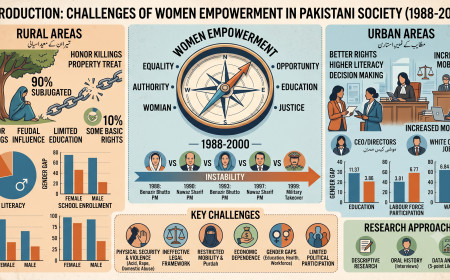
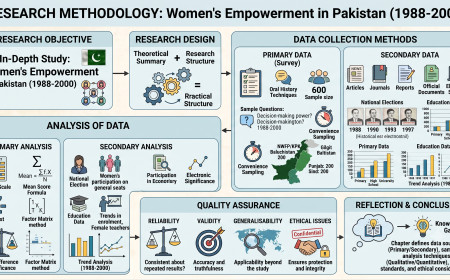
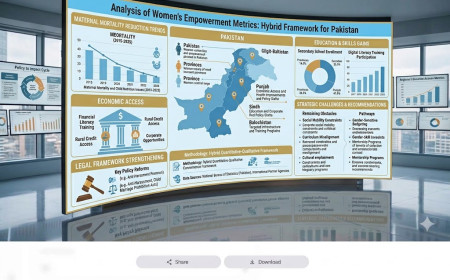
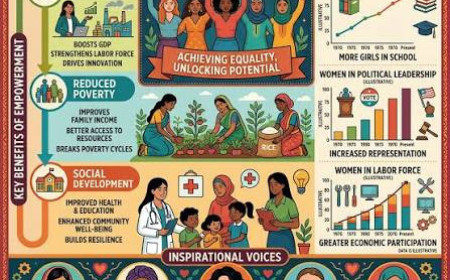
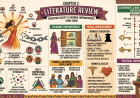
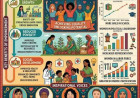
Comments (0)