

Concept of Feminism and Society of Pakistan
Pakistan won independence from the colonial masters as well as majority of usurpers of the personal rights of common people. The deprivation and discrimination was against both men and women. During the Independence Movement and the initial years of nation-building, equal rights for all were proclaimed, irrespective of creed, colour and sex. Thus women were always considered equal partners in the struggle for independence as well as in the nation building activities during the formative years of the young nation. However, in practice the “equality of the sexes” has been ignored. According to the Fourth United Nations World Conference (1995), “even after five decades of independence of Pakistan, women were facing lot of problems and suffering due to stiff socio-cultural traditions and customs as well as rigid orthodox norms”. This state of affairs continues due to the problems like lack of social will, adherence to status quo and political inertia. In order to obtain a balance between

INTRODUCTION
Pakistan won independence from the colonial masters as well as majority of usurpers of the personal rights of common people. The deprivation and discrimination was against both men and women. During the Independence Movement and the initial years of nation-building, equal rights for all were proclaimed, irrespective of creed, colour and sex. Thus women were always considered equal partners in the struggle for independence as well as in the nation building activities during the formative years of the young nation. However, in practice the “equality of the sexes” has been ignored. According to the Fourth United Nations World Conference (1995), “even after five decades of independence of Pakistan, women were facing lot of problems and suffering due to stiff socio-cultural traditions and customs as well as rigid orthodox norms”. This state of affairs continues due to the problems like lack of social will, adherence to status quo and political inertia. In order to obtain a balance between male and female rights and empowerment of women a strong system of civil society is needed that would educate the masses to overcome the stated issues. There is dire need of radical changes in the customs, statutory and constitutional laws. Several women studies indicate that the state has never been neutral so far as gender biases are concerned. During the military regime of 1977-88, overall attitude of Pakistani politics toward female empowerment has undergone drastic changes.
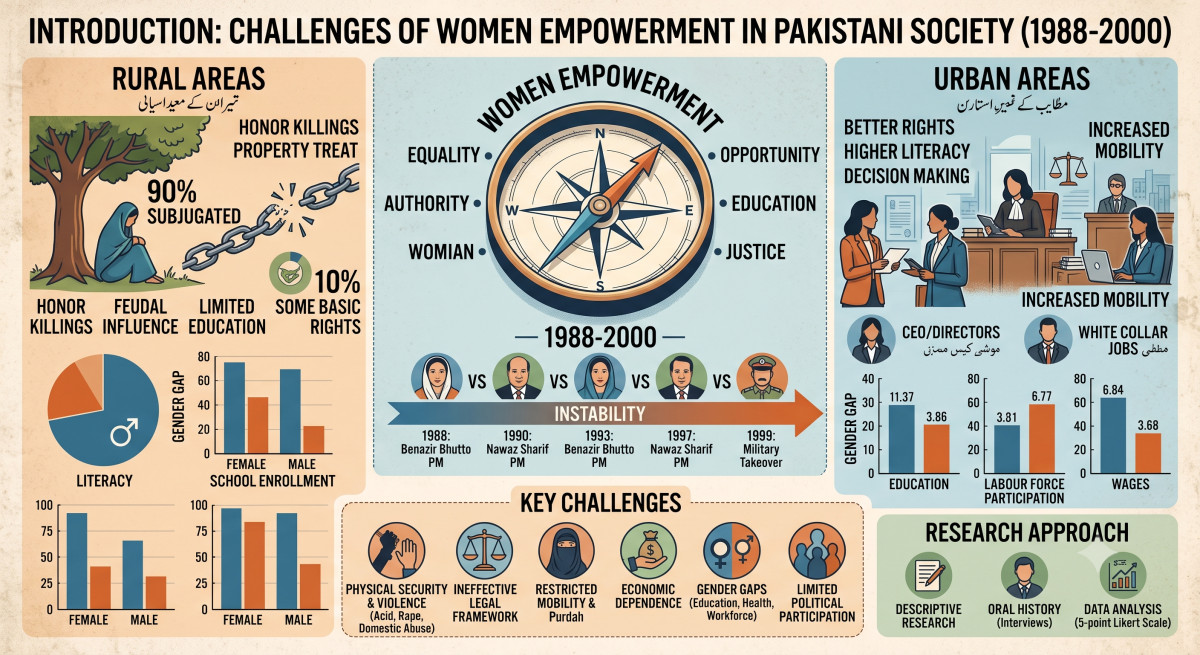
After separation of East Pakistan, the country was in a state of shock. At this juncture a democratic government was formed that revived spirits of heart-broken nation. In 1977, general elections were held in the country. The political unrest against the ruling party and the rift among the political parties paved way for the imposition of Martial law in the country. A period of suppression started, women of Pakistan also suffered so far as their political, social and economic rights are concerned. After the martial law, in 1988 general elections were held and Peoples Party came into power with Ms Benazir Bhutto as Prime Minister. Within two years this government was dismissed on charges of lawlessness and corruption. In 1990 general elections were again held and right wing alliance under the leadership of Mian Nawaz Sharif formed new government. This government was also dismissed and the general elections of 1993 were held. The right wing alliance collapsed and the results of 1993 elections brought the Pakistan Peoples Party again into power and Ms Benazir Bhutto became the new Prime Minister of Pakistan. During her term the Benazir government took decisions to strengthen the education sector and foreign policy. However, her government also failed to complete its term in the office and was dismissed in 1996 by her own designated President of Pakistan Faroque Ahmed Khan Leghari. In 1997, again the general elections were held and Muslim League succeeded to form its government a second time. Mian Nawaz Sharif again became the Prime Minister of Pakistan but unfortunately this government also failed to complete its tenure and General Pervaiz Musharaf dismissed the government of Mian Nawaz Sharif. During all these years, democracy was there, but uncertainty and inconsistency prevailed and the elected governments remained under pressure. Due to the frail situation of the elected governments the policy towards public sector also suffered and saw several ups and downs. These rapid changes in the governments resulted in reversal of policies during this period. This is an important era to understand the efforts of women empowerment, political will and direction.
Women Empowerment and Development of Feminist Thought
Concept of Feminism
Feminism is used as a comprehensive term that covers a range of ideologies and theories that pay special attention to the rights of women and their position in the society and culture. The idea behind the feminism is that the position of women in the society is not equal to men and society is structured in favour of male (Ali, 2000). The concept is fluid and flexible that is variable because the term feminism is based on the realities and level of consciousness, actions and perceptions. This term is used for the movement of women that began in the late 18th century for the economic equality of women compared to men. During different periods, feminists used different theories to describe these inequalities that varied with time and geographic conditions.
History of Feminism
The feminist thoughts and activities can be divided into two different periods or waves. The first wave began in the late 18th century and continued to 1930s. During this period the emphasis was on equal rights for both genders. The second feminist wave began in the late 1960s and draws attention towards definite needs of women. In this era, several theories and approaches were developed that stressed the difference between men and women. Although the movement started in the 18th century but the specific word ‘feminism’ was used in the late 19th century. In its second phase the liberation movement of women got new turn with rights-based concern of equality between men and women and this phase emphasized the physical and psychological differences among the male and female. During the first phase equal rights of women took theoretical justification by John Stuart Mill and his wife Harriet Mill Taylor (Farooq 2003). After 1850’s, the campaign about the women’s equal rights became focused on winning the right to vote.
Feminist Thoughts
Feminism is broad based phenomena that contain a large variety of concepts and philosophical perspectives. But all these theories and perspective describe the oppression of women and describe its causes and consequences. This also involves strategies to combat the problem and the ways of liberation for the women. These are generally discussed as:
- Liberal Feminism
- Marxist Feminism
- Radical Feminism
- Socialist Feminism
- Psychoanalytic Feminism
- Existentialist Feminism
- Postmodern Feminism
All these concepts of feminism are paths on which the movement of equal rights of women travelled and reached the new paradigm of women empowerment. Thus the paradigm of women empowerment is a new perspective of feminism which evaluates the power of women, their influence and participation in daily activities and process of decision making.
Empowerment
Empowerment is considered as one of the important element of human development. The concept of empowerment is holistic and its process in one direction does not mean empowerment in all directions.
Women Empowerment
This process helps women to get proper space in the society and to re-evaluate their lives collectively. This process also enables women to make their choices in lives and provides proper share in the society and resources. This process also leads women to higher level of consciousness and changes the mindset of male domination.
The term “women rights” refers to the entitlement and freedom of women irrespective of age limits. This is not necessary for these rights to be institutionalized. The basics of Pakistani society are on the teachings of Islam where men and women have been granted equal rights in all aspects of life. These aspects can be the religious as well as social. Islam treats all the human beings on equality basis. In Islamic Society women are provided with equal right of getting education on all the levels. On the other hand Islam has authorized women in the most important decision of life that is getting married as this cannot happen without the permission of that woman who is getting married. In general, in the Pakistani society these practices are not being exercised properly. In documents and discussions the Pakistani society is labeled as Muslim society with equal rights of women but in actual practice the situation is quite different. For further discussion on the women empowerment and the rights, the overall situation can be divided into the following two sub categories:
· Women Empowerment in Urban Areas
· Women Empowerment in Rural Areas
There is vast difference in the authority of women in both these areas and the women of rural areas are lesser empowered and in many areas women are victims of violence in the society as well.
In the present study emphases is on analysis of environment and conditions that women had faced during the period 1988–2000, where most of the women in society were unable to understand their basic rights in society and were unable to get their rights and exercise their authority. The socio-economic empowerment of women impacts the society in a number of ways and proper execution of this concept provides rapid growth and development of the society.
The empowerment of women is highly important as this is base of the human development that leads toward the development of international community. The impact of the empowerment of women on social and cultural areas is secondary phase for discussion whereas the primary phase is the study of the nature of this empowerment. Without proper understanding of nature of empowerment this would be difficult to understand the impact of empowerment on society. There can be different situations that ensure proper empowerment of women in the society, viz.:
· Authority to determine their basic rights
· Having proper sense of self growth and the authority to take important decisions to develop their skills
· Proper authority and right to access available opportunities
· Authority to make decisions in their lives whether inside or outside home
· Authority to impact social and economic change and to make that change more meaningful
There can be other aspects as well; however, these are different situations that can help in assessing the empowerment of women in any society.
This study is based on Pakistani Society therefore the analysis would be made on the study of conditions, facts and figure of different areas of Pakistan.
In Pakistan gender relations are generally considered on two important and basic concepts. The general perception in Pakistan is that women are subordinate to men and the honour of men is vested in the actions of women of the family. In Pakistani society, women are also considered responsible for the maintenance of honour of the family. For the protection of this honour, society limits the mobility of women, several places are restricted for their activities and they have limited permission to contact men. Women remained under the constraints of veil and it is done on the name of their protection and respectability. Purdah (veil) creates difference between male and female and it separates women from men by their activities both physically and symbolically. This is why most of women spend their life within boundary of home and go outside only on special occasions with the approval of male family head. Inside and outside home the life of women generally revolves around men and serving men. Domestic violence is also common in Pakistan, it includes physical abuse, acid throwing, burning, rape and killing is widespread in the country. Situation is complicated from legal point of view as very few women make a complaint about the physical injury and they bear all the torture. On the other hand the women who resort to the provision of legal help also face an adverse situation as their complaint is taken lightly by the police and judiciary and the complainant is sent back to their abusive husbands. Especially bonded labourers and poor women are victim of violence as they are more vulnerable in society. According to the figures produced by the Pakistan Institute of Medical Sciences more than 40% of married women are reported being slapped, beaten and sexually abused by their husbands when their husband feel dissatisfaction by their cooking and cleaning. These cases are also in big numbers when married women fail to bear a child or give birth to girl instead of boy.
For a proper understanding of different aspects of women empowerment one should have grasp of the issue and the ability to analyze it. According to social scientist Amartya Sen the term gender normally refers to socially constructed roles of women and men which is ascribed to them on the basis of their sex and hence gender, is context specific and learned rather than being innate. The inequalities of freedom between men and women reflect the basic difference between their ability, capability and potential. This inequality in the genders is reflected in their opportunities and in freedom and power. Usually different categories of gender inequality are identified, including basic facility, profession, ownership, family inequalities and mortality. Suppression of women and gender equality is not an issue in Pakistan only but it is a big problem worldwide and it exists even in the developed countries. It is said that in the United States, more than 7 million women are raped or sexually harassed every year. In South Asia the situation is comparatively more critical but in Pakistan the gender equality is more pronounced in the region. In Pakistan it occurs in all classes, sectors and regions of the country. It is not a homogenous phenomenon but it is an interlinked problem and is collection of unjustified norms.
A major problem for women in Pakistan as well as the world over is poverty. It means that women lack power and choice over their lives and it results in economic and social deprivation at several levels. In the world 1.3 billion people are living under the poverty line and among these 70 % are women, so the poverty of feminization is a global concept. This is why women are more vulnerable in the society towards discrimination and violence. In Pakistan the situation is worse as the women are facing intra household disparities in distribution of food and economic per capita investment on male and female members within the family. The access and control over the productive resources of women is nominal and limited. Women need power to become more empowered as power is knowledge, voice, choice and ownership but still they are far away from its true sense.
In Pakistani society there is a visible division of male and female and women lack social value and status. Due to productive role of male member the son is important and resources of family are diverted in his favour. It is normal practice in Pakistani families that male members are given better education and skillful training while female members are imparted domestic skills to be good wives and good mothers. It is very clear that education is an important factor in women empowerment because it enables women to become more productive and important both inside and outside home. The education of a mother is beneficial to whole family and community services and it has an impact on the family size. On the other hand literacy has limited effect on the ability of women’s access to relevant information. There is a big gender gap in education sector in Pakistan, especially among children of 12 years and older. Girls in rural areas in education are in lesser numbers than boys and the drop-out ratio is higher among females than the males. This means that the women are getting less per capita resources in education sector than men. This gap is both on primary and secondary levels and in other sectors of education expenditures. In the education sector the percentage of girl’s enrolment in primary schools is significantly lower than that of boys and this gender gap increases in secondary and higher education enrolment. According to a World Bank report school enrolment rate are lowest in Pakistan among the South Asia (2005). Gender gap in literacy and school enrolment is significant with the neighboring countries and other under developed countries. According to the census of 1998 the literacy rate in Pakistan was 43.92 percent in which 54.81 percent were male and 32.02 percent female. These figures indicate the situation about female education in Pakistan and the disparities in this field. Due to lesser economic, social and cultural standing of women they are enjoying lower status in the society. Social and familial control on the women’s sexuality and their economic dependence on men increase restrictions in their life. Their mobility with the approval of men also creates a negative impact on their health. Household food distribution is also biased and it creates nutritional deficiencies in female children. The tendency of early marriages for girls, excessive childbearing and high levels of ignorance create a negative impact on their physical life. The strong gender disparity in education sector have strong roots in the society as in 1996-97, the literacy rate in urban sector was 58.3% but in rural sector this was 28.3% and only 12 % in women of rural areas (Economic Survey 1996-97).
Women participation in politics was also limited during the era 1988-2000 and women in politics were fewer in number. In the legal sphere, constitutional reforms were considered insufficient to combat the gender issues and to build equality for the women. In health sector, the reproductive services were low and maternal mortality rate remained high. In the labour sector limited employment opportunities and lower wages for women were causes of disparity and vulnerability for women. Reduction in gender disparity is still far behind and needs careful consideration of these serious issues. This situation is one of major reasons of increasing incidents of gender violence.
It is said that the legal procedures and laws in Pakistan are in-sufficient rather ineffective for safeguarding rights of women. Traditional social norms of gender roles create perception of male dominance over women and the legal frame work does not neutralize it. This is why the practices of honor killing claim hundreds of women life each year in Pakistan. In addition, the cases of domestic violence, acid burning and rapes are in abundance. The cases of rape, honour killing and domestic violence are alarming and need serious consideration. The Human Right Commission of Pakistan estimated that a woman is raped after every two hours in Pakistan and half of these victims are minors (HRCP 2000).
Ineffective legal framework for the protection of women is also a cause of violation of women rights. They face inequality issues in opportunities, sexual harassment regulations and equal representation in employment, especially within the law enforcement and security matters. This is creating a trend of acceptance of inequality and makes existing laws for protection of women increasingly meaningless. So women are living in an environment of unequal freedom and insecure atmosphere.
Women have limited independence in mobility and have limited access of different fields in the Pakistani society. It had an effect of insecurity when women normally travelled independently outside of their settled areas of public spaces. This situation made a cause of restriction of their mobility and this means reduction in access of information. With lack of information, women remain unaware about importance of their health and legal rights. As a result, numbers of women give up their important legal rights to natal family obligations, wealth and to have financial and physical security in the adverse circumstances. So, the lack of complementary proper institutions, sufficient security nets and admittance to legal services, not only weakens the enforceability of these laws, but reinforces special dependence on family network. In accumulation to legacy rights, women face alike difficulties in exercising their rights regarding marriage, alimony and divorce issues. Early marriage is other big subject, as one third of the girls marry before the lawful minimum age of sixteen. The Family Law Ordinance of Pakistan 1961 provided, at least in theory, unprecedented protection for women, although; some provisions of the law are unenforced due to lack of understanding of the existence of such laws and customary practices. Women’s enhanced reliance on their family and community is also a big obstacle preventing the empowerment of women.
As another factor women are less represented in both the urban and rural areas in workforce of Pakistan. According to World Bank, in 1999, only one in four adult women participated in the labor force, in contrast to seven in ten of the men (2000). Half as many women report labour sector action in urban regions as they do in rural areas, due to the fact that much of the work that is accessible to women is in the field of agriculture. As a result women have a narrower set of professions open to them compared to men. They have opportunities open mainly in agriculture sector in rural areas and unskilled jobs, like household services, in the urban sector. Thus women earn lower wages than men. Most of occupations open to women are in the informal sector that lack regulation and transparency. Some women who are working with men, in white collar jobs, still tend to become ghettoized. Traditionally, female friendly jobs are available in education and health due to security. Thus, the employment of women is largely determined by the occupation that is socially acceptable for them. Restricted participation of women in wage labour is of particular concern because contribution in paid work has important impact for self-sufficiency of women and their empowerment. Different studies tell the story that working women have effective voice in house hold decisions and are much likely to participate in the community and political activities.
Women Empowerment in Urban Areas
Compared to the rural areas, the situation is better in the urban areas of Pakistan. Here, most women get their basic rights and exercise empowerment to a better level. Literacy rate is quite high in the urban areas and women are working at better jobs and exercising power on higher levels like the Directors and the CEO’s of different organizations. On the other hand, the participation in the domestic level decisions is also quite high in the urban areas. They are thus free to move in society and can take decisions to spend their lives according to their desires. The attitude of parents in the urban society has also changed much in this area as now daughters are not considered a burden to the family and are more likely to be treated with equal rights, encouraged to perform different duties and authorized to take major decisions concerning their lives. The trend of early age marriages is also on the decline as the mindset of society has changed during the last several decades. Also a major change has occurred in the adoption of professions; with women now working in fields other than medicine and teaching. However, women in urban areas still face challenges in exercising their duties but the overall trend has changed because of more conducive environment. The rise of inflation has also changed the mindset of society and now most of the urban women are contributing towards economy of their homes, while doing so they are provided with better level of empowerment in different fields.
Since women in urban areas have better level of understanding and approach to the resources and authorities, the level of violence against them is quite low. The reported cases of violence against women in urban areas are quite short as compared to those in the rural areas.
Women empowerment in Rural Areas
Conditions of women are quite different in the rural areas of Pakistan as most of the areas are under the influence of the feudal lords and Jagirdars. Women’s rights are suppressed badly. Empowerment for them is of secondary concern as these women are unable to exercise even their basic rights. Women are considered and treated as property. Women in the rural areas are working as domestic servants and in the fields with men but have little right to participate in the decision making process, even in the major decisions of their lives like getting married. There may be a chance that about 10% of women in the rural areas are able to exercise their basic rights but the remaining 90% are being treated badly. Some of them are killed just for the prestige in the honor killing and other customs that do not exist in the teachings of Islam. These practices have been adopted by the male dominated society to preserve the superiority of men. The situation is aggravated due to lack and access of women to education. Women are denied access to education simply to retain male superiority.
Violence against women in rural areas is also high. There is a large number of registered cases of rape, forced marriages, killing for honour and other illegal customs but most of these remain unattended. However, registered cases are insignificant in numbers compared with overall incidents of violence. Most cases never get registered as local feudal lords exercise influence over police and other authorities, and the victim is unable to reach the authorities for justice.
In this study the role of oral history is very important as the data collection and analysis based on this kind. So it is important to explain oral history.
Oral history is now playing a vital role for collecting of information about the marginalized groups. Actually this history is an unending dialogue between present and past. This kind of history is now captivating roots in all over the world and getting the recognition in the social sciences. It is also a fact that some historians are still resisting this type of development but oral history has its own role.
Samuel Johnson (1990) said that all history was oral initially and in all historical work there are past events that proved witnessed, discussed and then documented.
Oral historical sources may be divided in two types;
1. Oral History: Recollections of Contemporary Events
2. Oral Tradition: Transmitted information orally by many generations as collective meaning in community.
Since 1920, oral history took place and become a basic tool for the social scientists. This was a new way of viewing history and was promoted by local activists who were interested in feminist, ethnic and native agendas. It became a third major shift, since 1980, as the researchers go beyond the archival imperative of collecting oral testimonies to find the possibilities of understanding towards new ways of presenting history.
Jan Vasina prepared a main methodological input in 1961 when he presented a methodology, explaining how historians can use oral traditions. This work enabled historian to evaluate oral sources with techniques as they were applying to written documents (Vansina, 1996).
In these techniques, the question of unreliability was discussed and overcame by examining the consistency. John Tosh credited the quality of understanding with the help of drawing history for from quantitative trend and restoring it to the human experience (Tosh, 1984).
Raphael Samuel elaborated oral history to replicate a diverse way of history that rejects to be safely boxed away in indexes and computer plan and turned on active relationship among past and present, poetic and political, objective and subjective (Samuel and Thompson, 1990)
Statement of the Problem
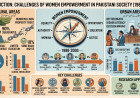
The study aimed at evaluating the challenges of women empowerment in the Pakistani Society in the specified era of 1988-2000.
Area of the Study
Empowerment of women in Pakistan is a slow process. Primary cultural shifts need changes in people’s opinions, their gender roles, and their environment.
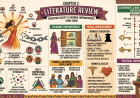
Women need freer mobility and easy access of information. They need an atmosphere where they should feel physical safety. For creating a safer situation for women to undertake easy mobility, access to justice is important to create the situation of meaningful empowerment. Improvements in the education and skills of women may increase their ability to find better jobs and participation in labour market. To achieve this goal there are some challenges for the women empowerment in Pakistan. The following areas have been discussed to assess the level of empowerment of women in Pakistan during the period 1988–2000:
- Participation in Politics
- Participation in Law making process
- Authority to make decisions on personal level
- Participation in the household decisions
- Land ownership rights to women
- Personal Physical Security
- Easy Mobility (Freedom of Movement)
- Right to get Education (Basic and Higher)
- Right and proper access to Health Services
- Freedom of Association
- Right to Employment
- Justice, Equality, Well being
- Share in Workforce proportional to the population
These challenges are not only in Pakistan, women face these problems all over the world, but of different magnitude.
Objectives of the Research
Objectives of the study were as under:
- To assess the social, political and economic empowerment in the specified era of 1988-2000.
- To find out the inter correlation between the social, political and economic factors of women empowerment.
- To find the distribution of resources for male and female in social sector, especially in the field of education during the period under consideration.
- To find out the gender gap and the participation of women in the political process in the era of 1988-2000.
This study will help to improve the situation as findings of different gaps and the issues in the system. These gaps would be indicated that needs important considerations and improvements.
Research Questions
This study was an attempt to find answers to the following questions:
- What was the level of Social, Political and Economic Empowerment of women during the period 1988-2000?
- Was there correlation between social, political and economic factors of women’s empowerment during the said 12 years?
- What was ratio of the distribution of resources for male and female in the social sector, especially in the field of education?
- What was gender gap in the said era and what was the ratio of women’s participation in the political process of the country?
Significance of the Study
The study may be useful in understanding of the challenges for women in Pakistan, especially their participation in politics, law making process, authority to make decisions on personal level, their mobility, right to education, health and job opportunities. Policy makers may benefit from this study while planning for reduction of gender discrimination. The study may be useful for public sector departments in law making procedures to reduce gender biases. It will also help political parties to understand gender gap in the political process of the country and will show women’s participation in the law making process. The study will also be helpful for Non Governmental Organizations in their planning and future projects of gender empowerment.
Delimitations of the study
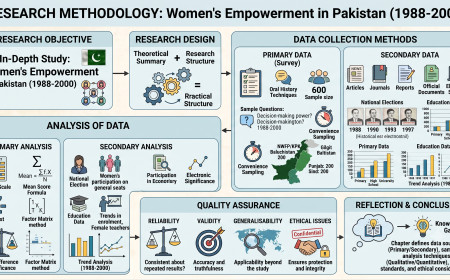
The study was delimited to four provinces of Pakistan and Gilgit Baltistan from where the sample for the study was drawn. The sample was taken proportionate to the population during the period 1988-2000. Participation of women in the political process was judged in the four national elections of Pakistan 1988, 1990, 1993 and 1997 which were held during the period under study.
Research Methodology
The study was Descriptive Research type in which following steps were taken.
- Research tool, 5-point Likert attitude scale was developed.
- Analysis of the data was carried out by applying appropriate statistical methods.
What's Your Reaction?
 Like
2
Like
2
 Dislike
0
Dislike
0
 Love
1
Love
1
 Funny
0
Funny
0
 Wow
0
Wow
0
 Sad
0
Sad
0
 Angry
0
Angry
0
Comments (0)